
True Shine Gems
True Shine Gems specialises in the exclusive sourcing of certified precious gemstones from the world’s most distinguished mines. Each stone is selected with uncompromising attention to rarity, provenance, and enduring beauty — reserved for those who value the exceptional.
This platform has been conceived as both a sourcing house and a reference. The depth of information presented throughout is deliberate: an exploration of colour, clarity, cut, geological formation, and market significance. It exists to inform as much as to offer — because knowledge is integral to discernment, and discernment defines true value.
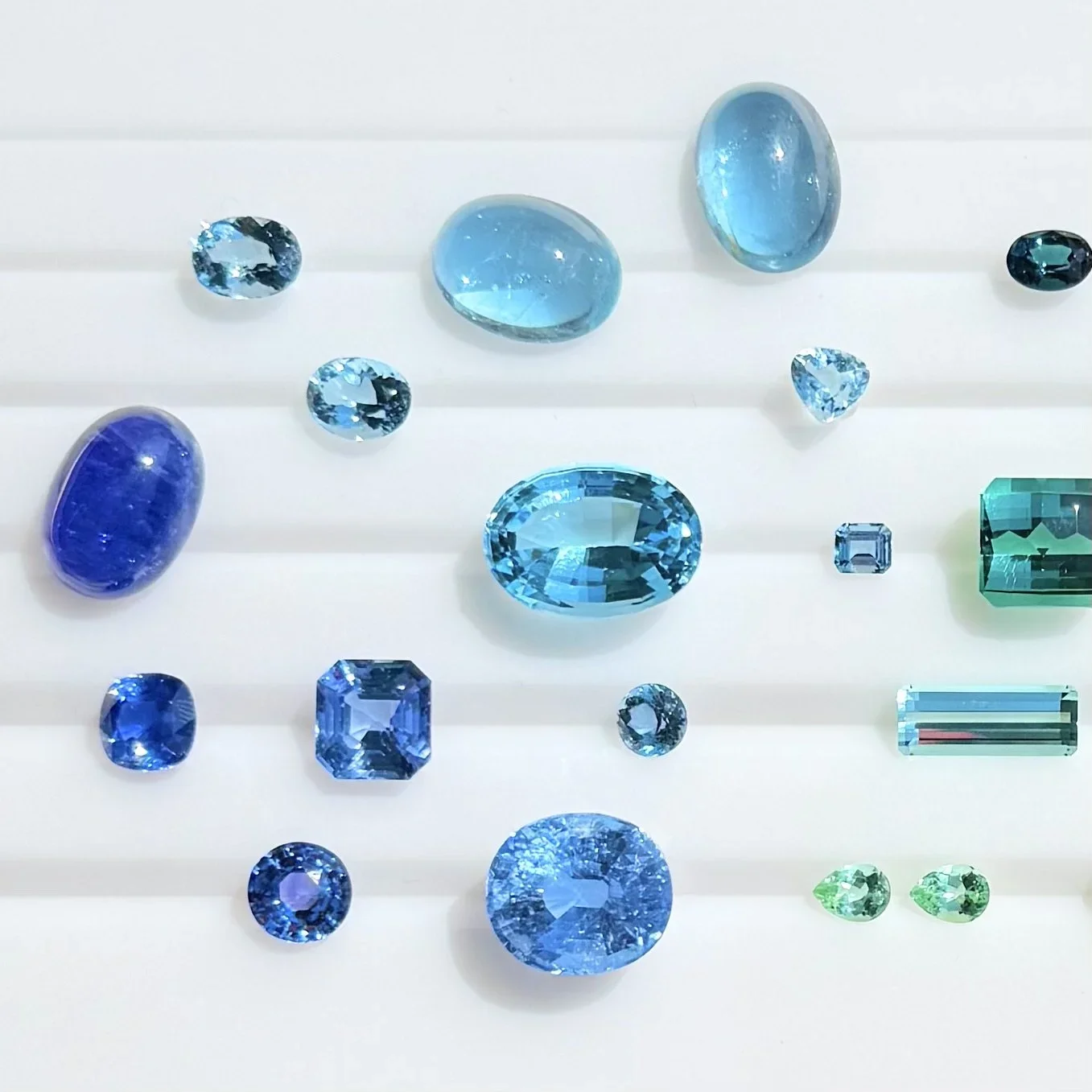
Through established relationships at source and rigorous standards of verification, every gemstone is approached with precision and complete transparency. This collection illustrates only a portion of what may be sourced upon request.
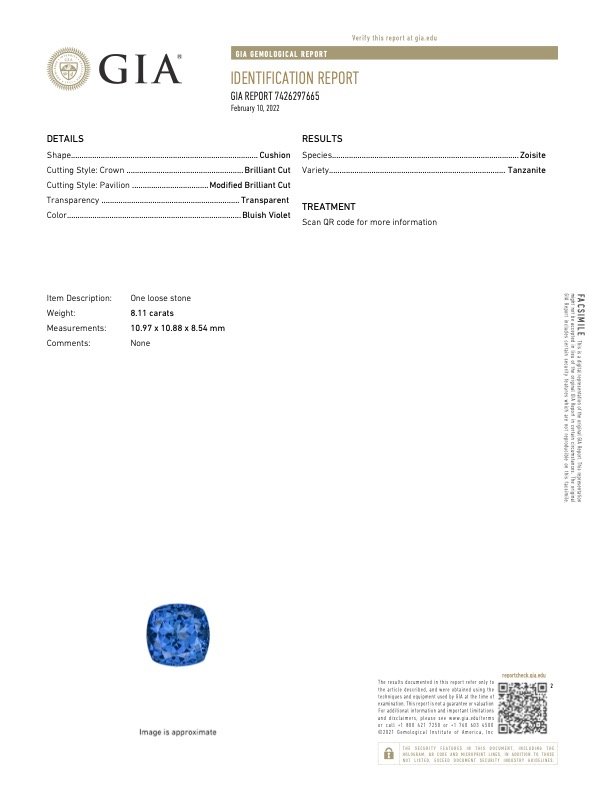
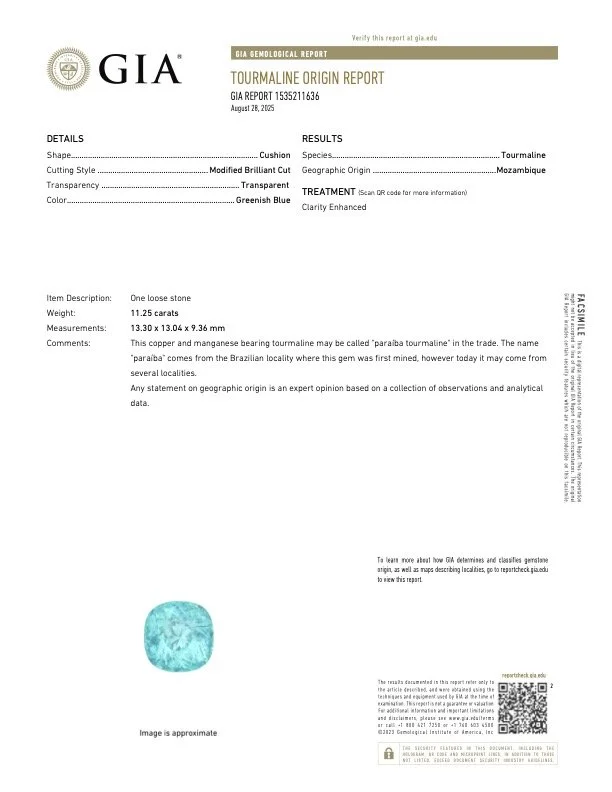
TANZANITE

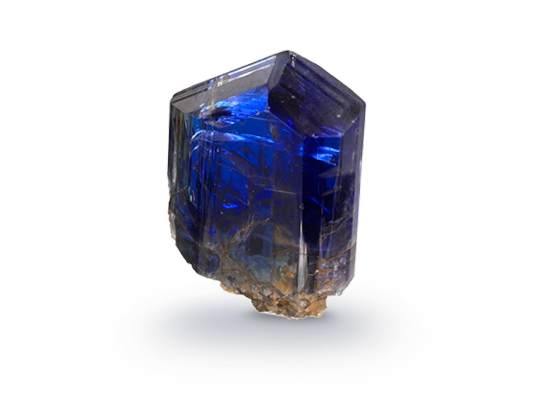
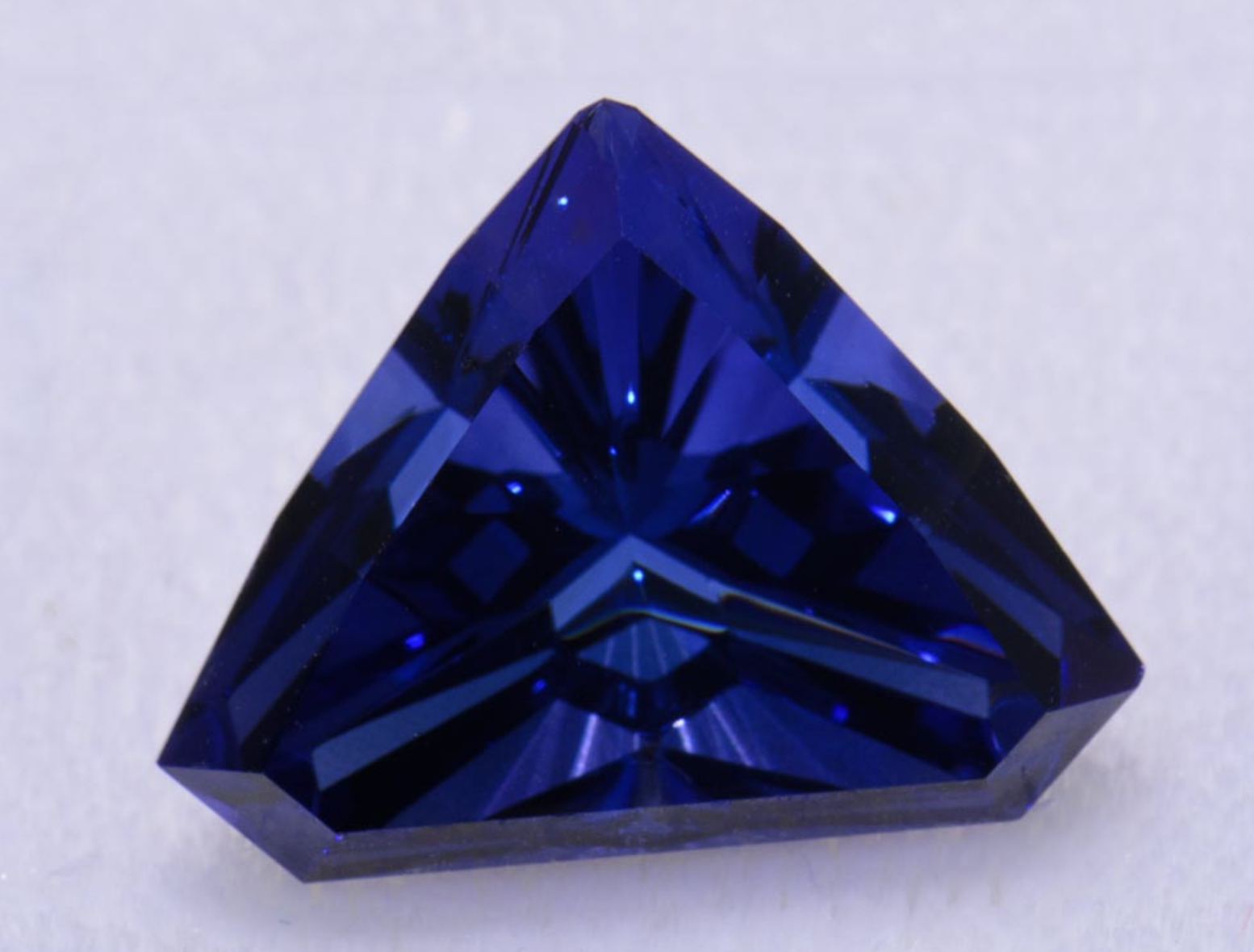
Found in just one place on earth, tanzanite is a relatively recent discovery. Tiffany & Co named this blue-violet variety of zoisite in honor of Tanzania, where it was first unearthed in 1967. Because the crystals show different colors depending on the viewing direction, cutters can fashion gems with a range of color from violetish blue to bluish violet depending on how much weight they want to retain from the rough.
-
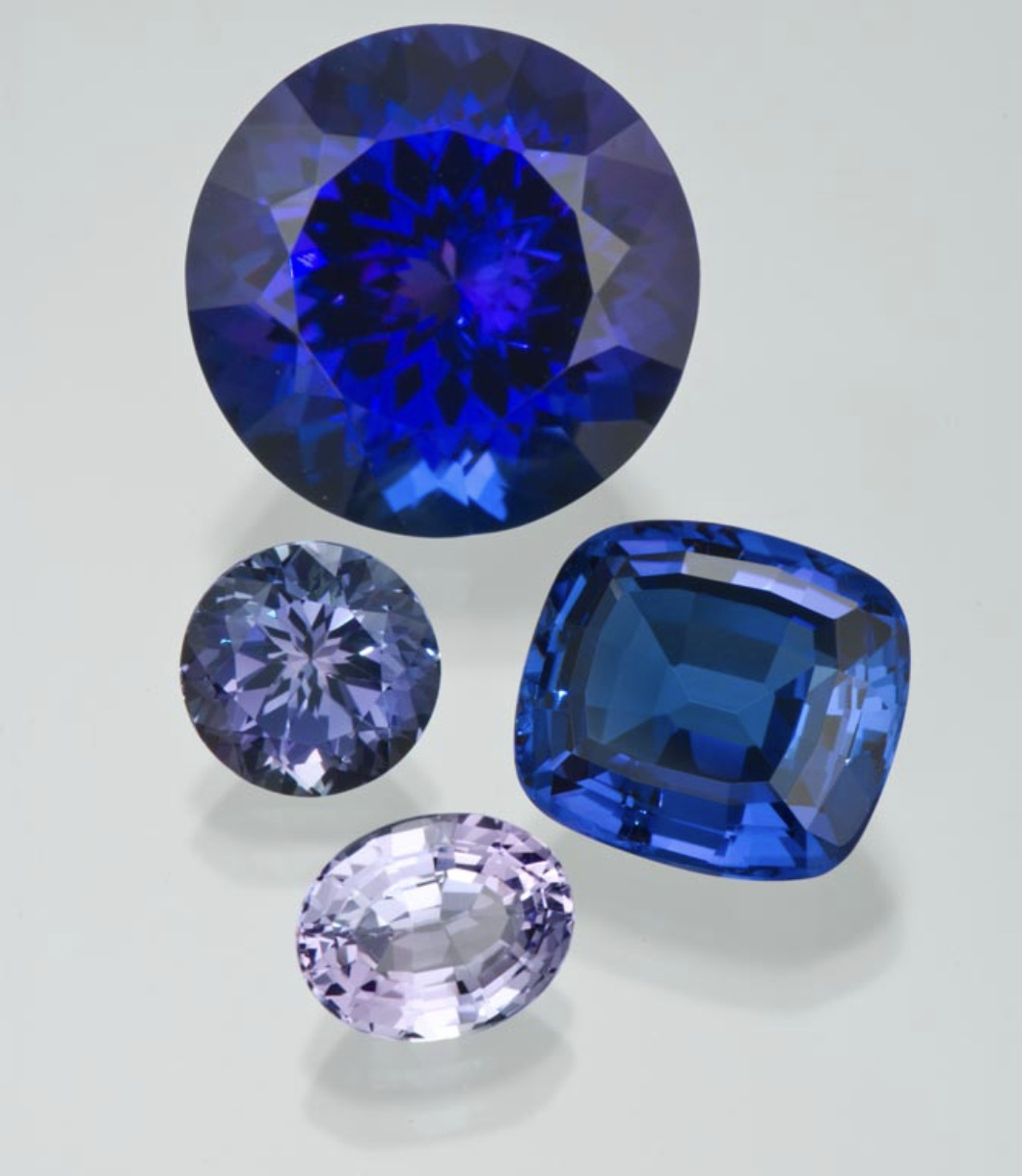
Deep saturated violet blue or blue violet are the most valuable tanzanite colorus. Paler hues are more commonly found.
-
Eye-visible inclusions decrease the value of tanzanite, particularly in lighter coloured stones.
-
Tanzanite is available in a wide range of shapes but cushion and oval cuts are most common.
-
Tanzanite colour is less saturated in smaller sizes. Gems benefit being above five carats in size to have fine colour. Because fine-quality Tanzanites are rarer in larger sizes, value typically increases with carat weight—particularly when strong color, clarity, and cut are maintained.
Birthstones & Anniversaries
Tanzanite, along with zircon, turquoise, and blue topaz, is one of the birthstones for December. It's also the gemstone associated with the 24th wedding anniversary.
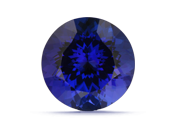
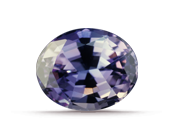
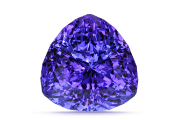
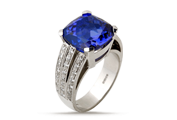
Tanzanite is the violet blue to blue violet variety of the mineral zoisite. It is mined commercially only in one area of the world: the Merelani Hills of Tanzania, which is where it gets its name.
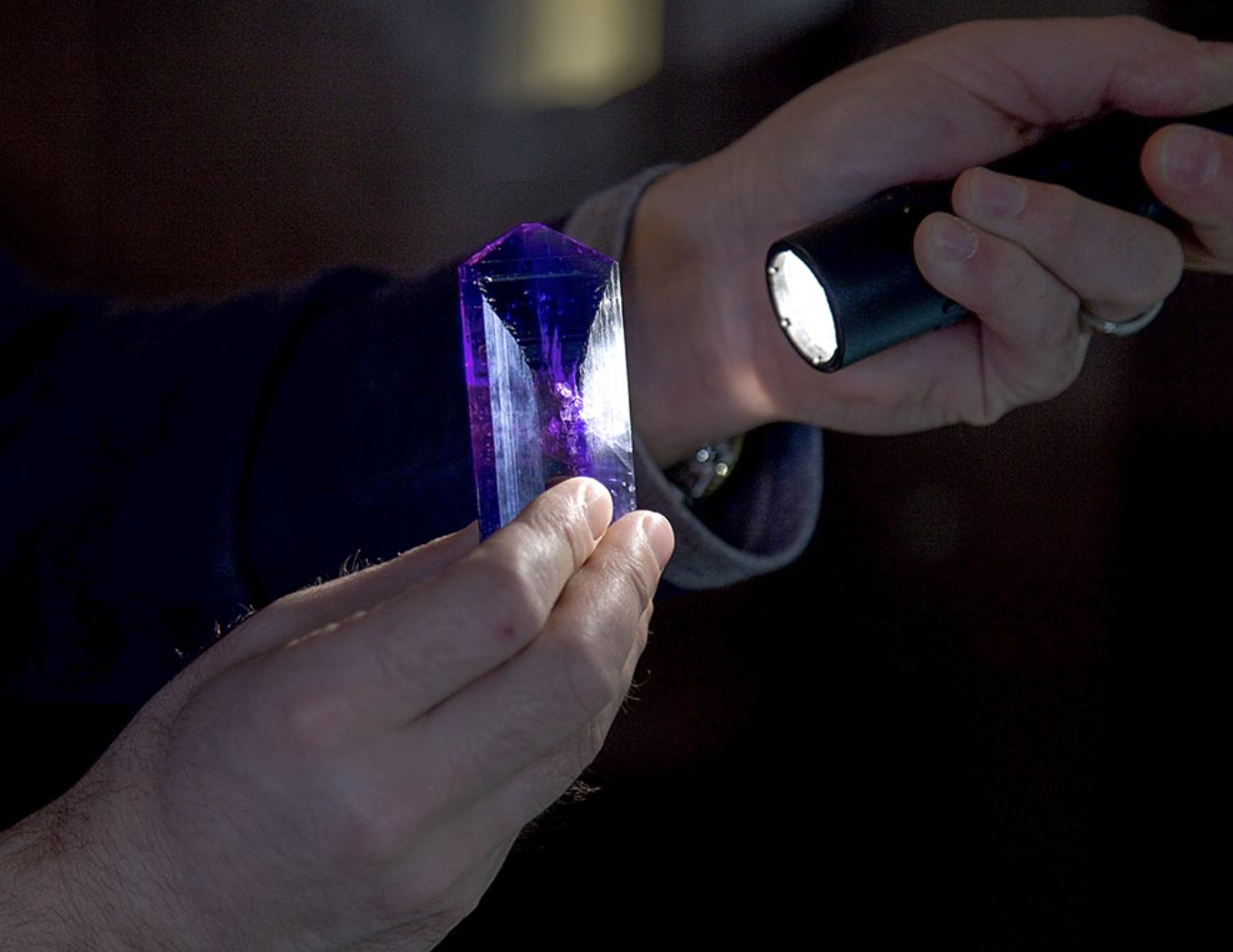
Tanzanite’s appearance is significantly shaped by its pleochroism, which is the phenomenon where a gemstone displays different colors when observed from different crystal angles. This characteristic was first documented in scientific literature shortly after the stone's discovery. In 1969, American Mineralogist described tanzanite’s pleochroic colors as ranging from red-violet, deep blue, to yellow-green. Today, most tanzanites undergo heat treatment, which typically diminishes or eliminates the yellow-green or brownish tones, enhancing the blue and violet hues.
High-quality tanzanite may appear as a violetish blue, similar to that of a fine sapphire, or exhibit a distinct violet shade all its own. Some stones may also take on a more purplish appearance, depending on how the cutter aligns the gem. Both violet and blue pleochroic colors are clearly visible when the stone is gently tilted or rocked. This means that each tanzanite showcases a combination of these pleochroic colors. The final color seen depends on the original rough stone’s color, its size, the cutter’s preferred orientation, and the type of light in which the finished gem is viewed. Cool lighting, like daylight-equivalent fluorescent light, will emphasise the blue tones, while warm lighting, such as incandescent light, brings out the violet to purple shades.
As with other coloured gemstones, tanzanites with vivid, intense colours are highly coveted, whereas lighter, pastel-coloured stones are more common and affordable, offering a more subtle charm.
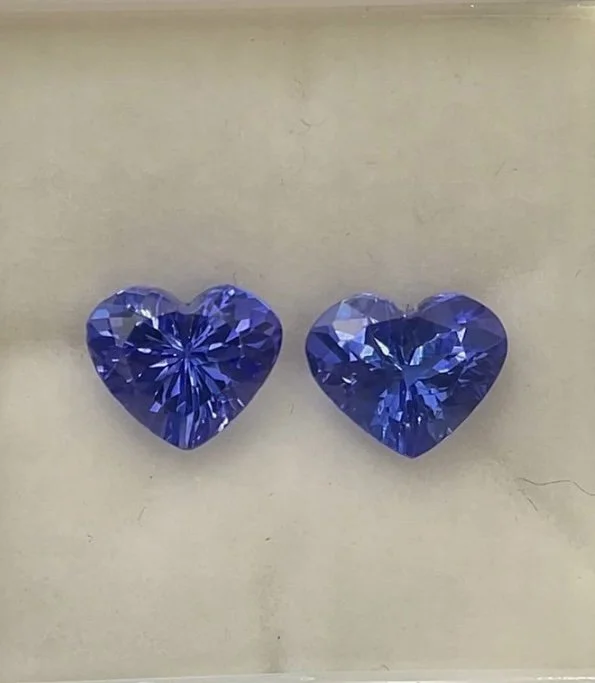
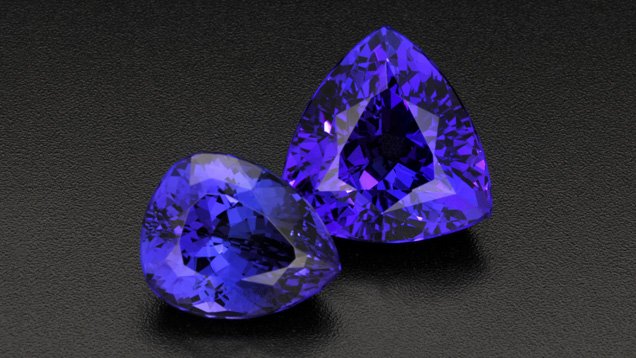
Merelani - Tanzanite is uniquely sourced from the Merelani Hills in northern Tanzania, making it one of the most geographically restricted gemstones in the world.
1967 - The discovery of tanzanite is credited to Masai tribesman Ali Juuyawatu, who found the first crystal in 1967, sparking global interest in the gem.
Pleochroic - Tanzanite exhibits pleochroism, meaning when tilted, it reveals three distinct colors from different angles, showcasing its remarkable color-changing properties.
Facts - Mineral: Zoisite Chemistry: Ca2Al3(SiO4)3(OH) Color: Violet blue to bluish violet to violet purple Refractive Index: 1.691 to 1.700 Birefringence: 0.008 to 0.013 Specific Gravity: 3.35 Mohs Hardness: 6 to 7

EMERALD
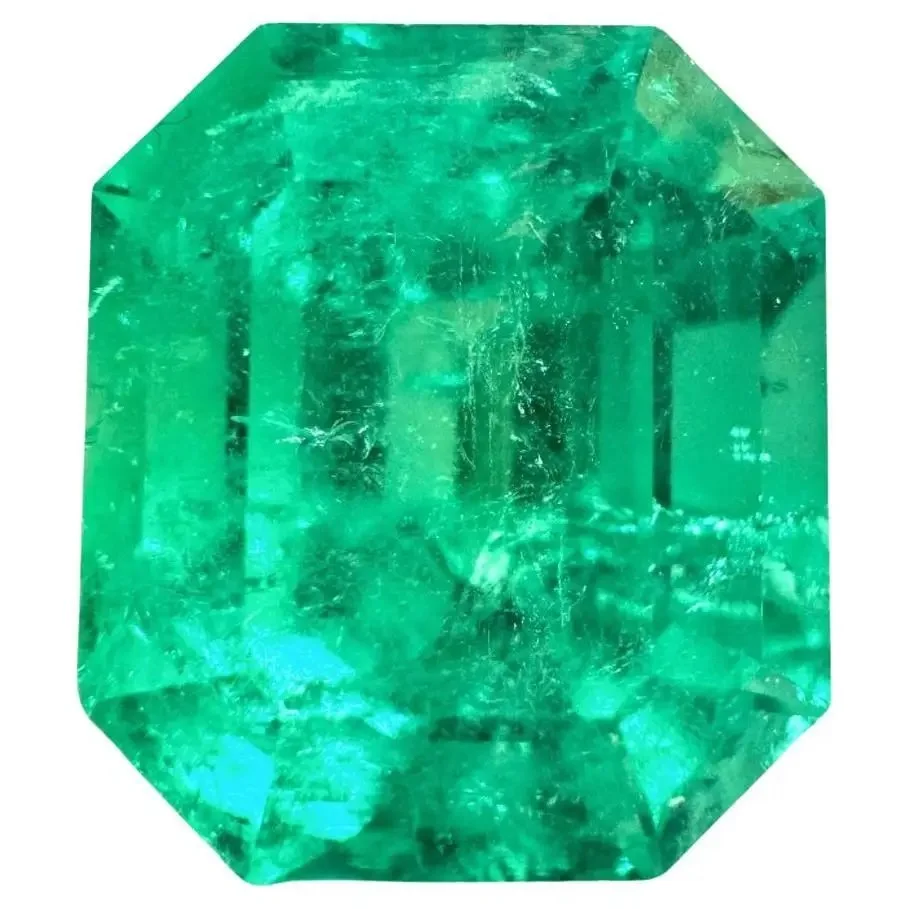
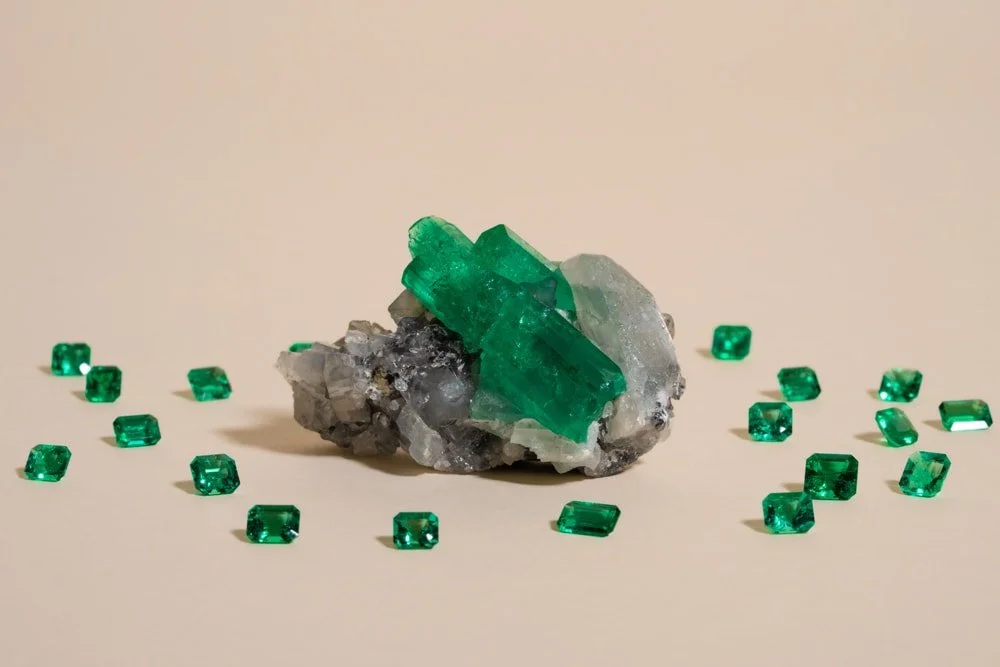
Emerald is the precious green to bluish-green variety of the mineral beryl, prized for its vibrant color and rarity. Known for its rich green hue, emeralds are primarily sourced from Colombia, Zambia, Brazil, and Zimbabwe, with each region producing unique qualities of this stunning gemstone. The earliest known emerald mines were in Egypt, with origins dating back to at least 330 BC and continuing into the 1700s. Cleopatra was famously fond of emeralds and incorporated them into her royal jewelry.
-
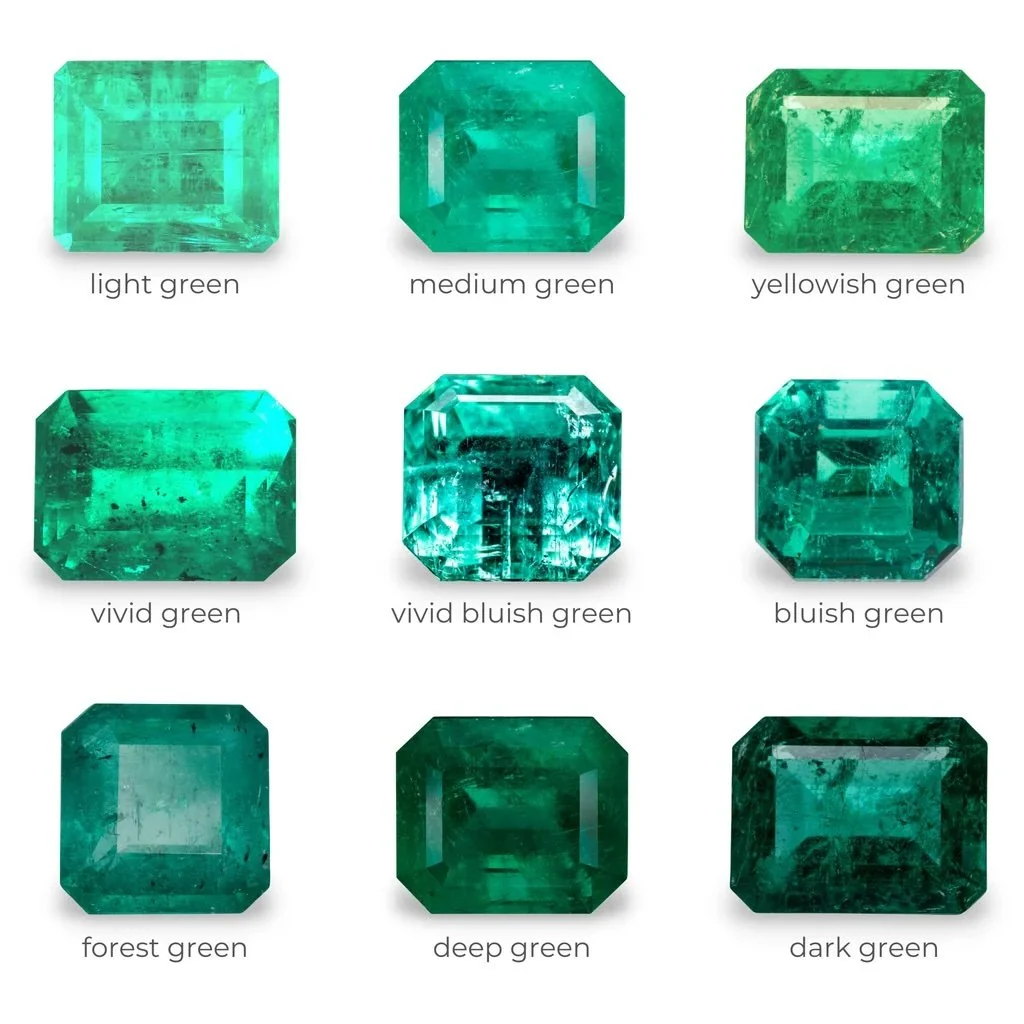
The most sought-after emeralds range from bluish-green to pure green, with a rich, vivid colour saturation.
-
In emeralds, you can often find inclusions referred to by dealers as an internal "jardin," meaning "garden," due to their resemblance to a natural landscape.
-
Emeralds are often cut into rectangular step cuts, known as emerald cuts, due to their crystal structure.
-
Due to its lower density, a one-carat emerald will generally appear larger than a one-carat diamond.
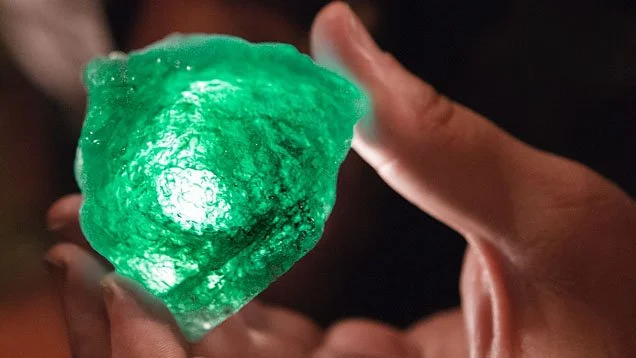
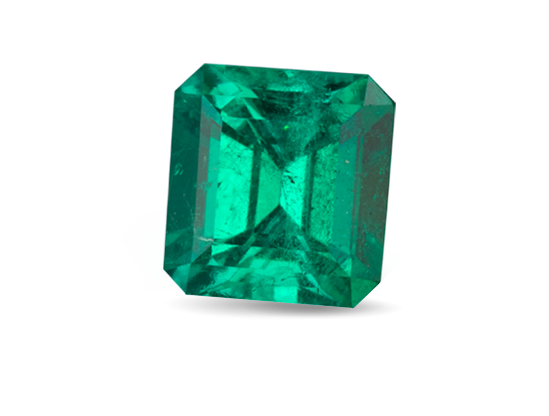
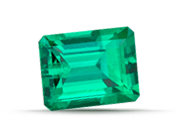
Emeralds are the green to bluish-green variety of the mineral beryl (Be₃Al₂(SiO₃)₆). Beryl itself is a beryllium aluminum silicate, and its various forms include aquamarine, morganite, and heliodor. The striking green color of emeralds is primarily attributed to trace amounts of chromium (Cr), and sometimes vanadium (V). These elements are responsible for the stone's vivid hue, which can range from a rich, deep green to a slightly bluish tint, depending on the exact chemical composition.
The classification of emeralds is closely tied to their color quality. While all emeralds are beryl, not all green beryls qualify as emeralds. The defining characteristic of an emerald is its intense, saturated green colour. Stones that lack sufficient colour depth, appearing opaque, too pale, or light, are typically classified as green beryl rather than emerald. This colour threshold is subjective, but it’s generally agreed that an emerald must exhibit a strong, vibrant hue to earn its designation.
Emeralds are also known for their natural inclusions, often referred to as the "jardin" (French for "garden"). These internal characteristics are a hallmark of emeralds and can include fissures, gas bubbles, or mineral inclusions. Rather than detracting from the value, these inclusions are considered part of the gem's natural identity and authenticity, making each emerald unique. While clarity is an important factor in emerald valuation, some degree of inclusions is accepted and expected, unlike other gemstones where inclusions may lower value.
Emeralds are typically found in specific geological environments, most notably in metamorphic rocks and pegmatites, and are predominantly mined in regions such as Colombia, Zambia, and Brazil. Due to their scarcity and the difficulty in finding large, high-quality stones, emeralds are among the most prized and valuable gemstones in the world.
Birthstones & Anniversaries
Emerald, the gemstone of spring, is an ideal choice as the birthstone for May. It also represents the twentieth and thirty-fifth wedding anniversaries.
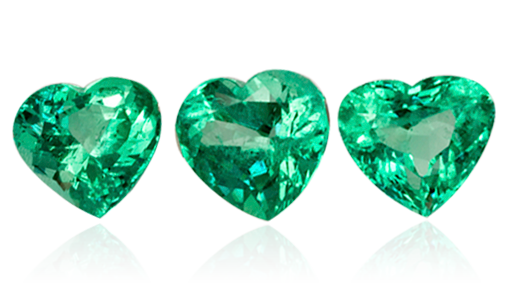
2.97 Billion Years - Age of the oldest emeralds, from South Africa.
Three-Phase Inclusions - Three-phase inclusions in Colombian emeralds contain tiny crystals of rock salt, liquid, and a bubble of gas.
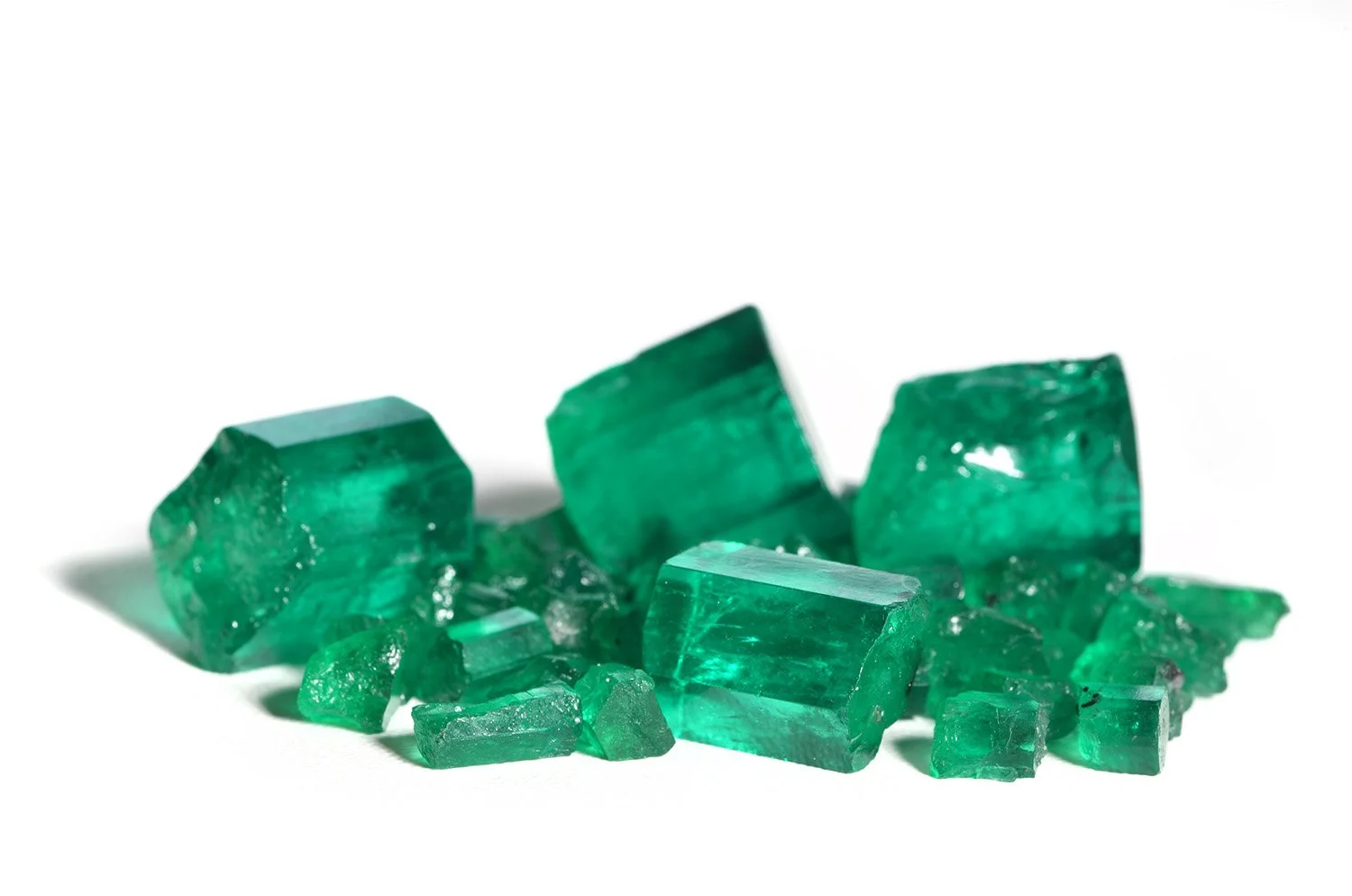
Hexagonal Crystals - The most exceptional emerald crystals are striking green hexagonal columns with flat tops, their natural beauty matching that of faceted gemstones.
Ancient Egypt - The first known emerald mines were in Egypt. It is believed that these mines were worked as early as 3500BC.
Facts - Mineral: Beryl Chemistry: Be3Al2Si6O18 Color: Vibrant green Refractive Index: 1.577 to 1.583 Birefringence: 0.005 to 0.009 Specific Gravity: 2.72 Mohs Hardness: 7.5 to 8
SAPPHIRE
The name “sapphire” can also apply to any corundum that’s not ruby red, another corundum variety. In addition to blue sapphire and ruby, the corundum group also contains what are known as “fancy sapphires.” These appear in violet, green, yellow, orange, pink, purple, and various intermediate shades. Certain stones display a color-change effect, typically shifting from blue in daylight or fluorescent light to purple under incandescent lighting. Sapphires may also occur in gray, black, or brown.
-
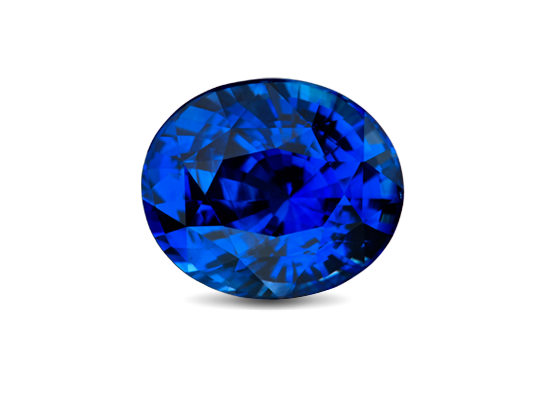
The most prized sapphires are those exhibiting a deep, intense blue—especially velvety to violetish blue in medium to medium-dark tones with strong, vivid saturation.
-
The finest sapphires tend to be eye-clean, meaning they show little to no visible inclusions to the unaided eye, which enhances their transparency and overall beauty.
-
A high-quality cut enhances the stone’s natural color intensity while minimizing visible inclusions and ensuring strong light return, making the gem appear vibrant and lively.
-
Sapphire has a density (specific gravity) of approximately 4.00, meaning it is relatively heavy for its size compared to many other gemstones. As a result, two stones of equal carat weight may appear different in size depending on their proportions and cut.
Birthstones & Anniversaries
Sapphire, the gemstone of September, is the traditional birthstone for that month. It also symbolizes the fifth and forty-fifth wedding anniversaries.
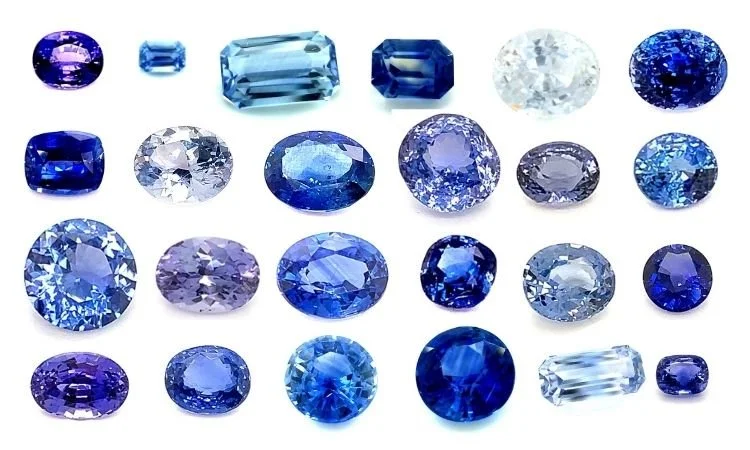
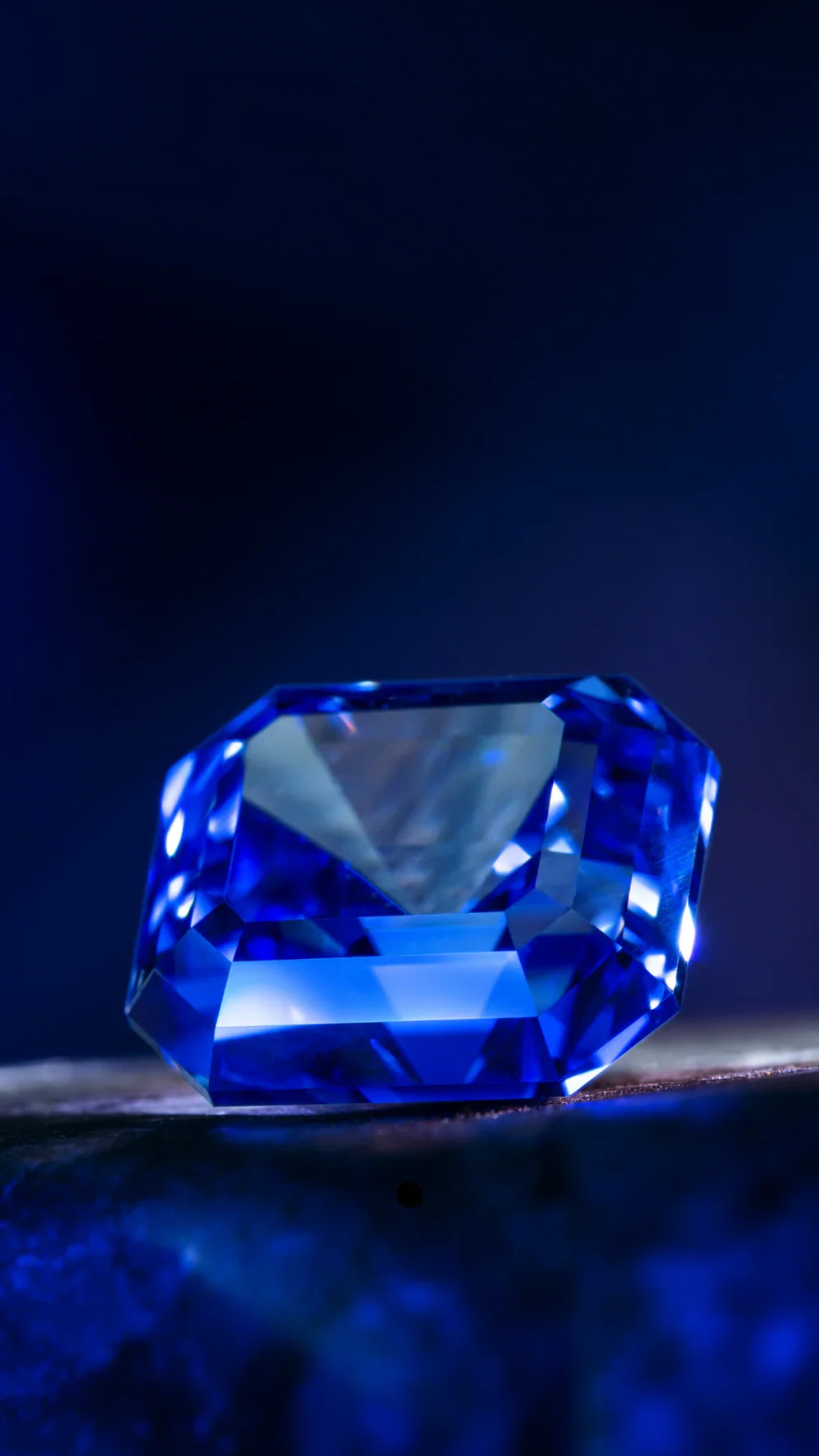
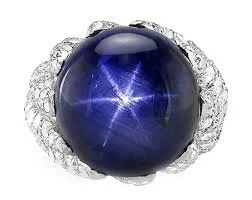
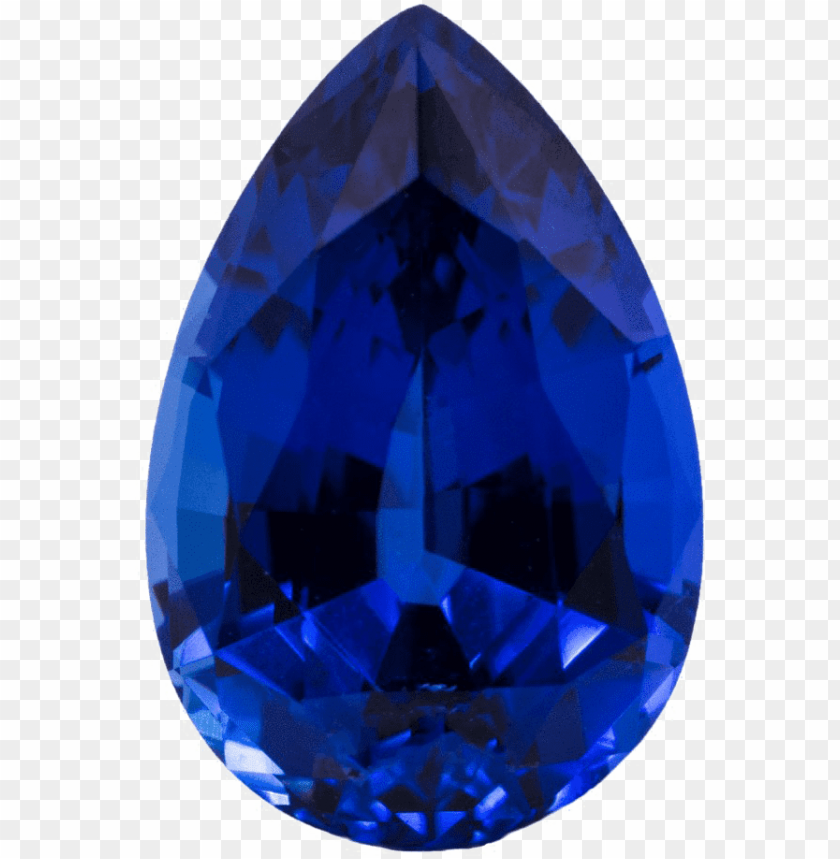
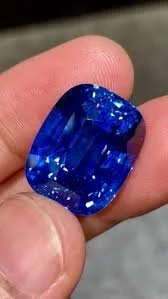
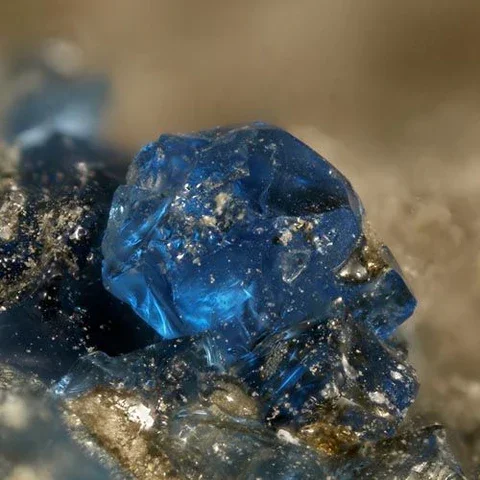
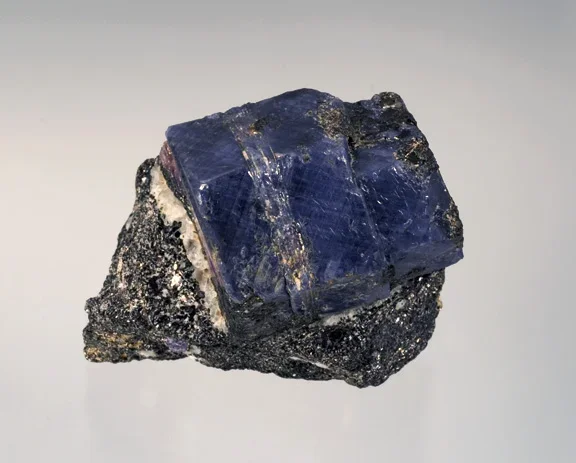
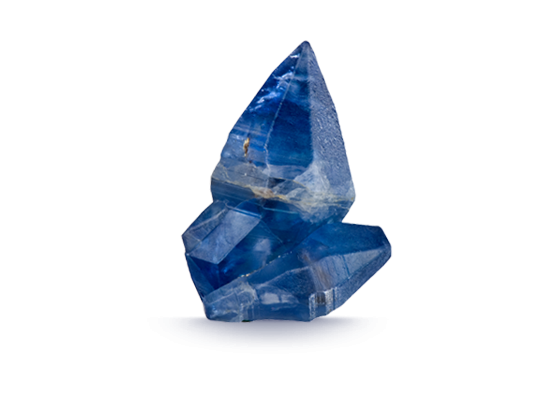
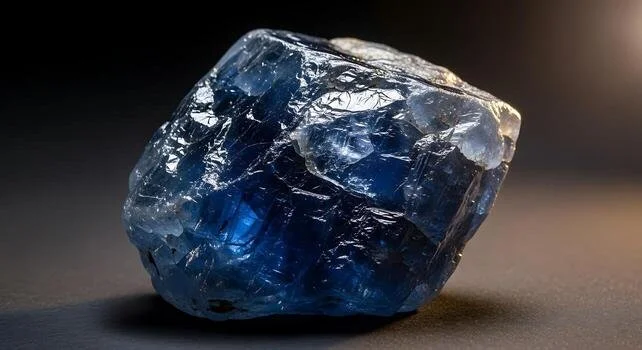
Sapphires are the blue variety of the mineral corundum (Al₂O₃). Corundum is crystalline aluminum oxide, and its red variety is known as ruby. While sapphire is most commonly associated with blue, the term also applies to all non-red gem-quality corundum, including pink, yellow, green, orange, purple, and other hues. The blue color of sapphire is primarily caused by trace amounts of iron (Fe) and titanium (Ti), which interact within the crystal structure to produce its characteristic hue, ranging from light to deep, vivid blue depending on concentration and conditions of formation.
The classification of sapphire is closely linked to its color. Although all sapphires are corundum, only non-red varieties fall under the sapphire designation, as red corundum is classified separately as ruby. For blue sapphires, the most highly regarded stones display a strong to vivid blue with medium to medium-dark tone. Stones that are overly dark, grayish, or too light in saturation are considered less desirable, as intensity and purity of color are central to sapphire quality evaluation.
Sapphires commonly contain natural inclusions, which can include fine rutile needles (often called “silk”), mineral crystals, or growth features formed during crystallization. These internal characteristics can influence transparency and, in some cases, produce optical phenomena such as asterism in star sapphires. While high clarity is valued—particularly stones that appear eye-clean—some inclusions are expected in natural sapphires and can provide evidence of authenticity and geological origin.
Sapphires form in a range of geological environments, including metamorphic and igneous settings, and are recovered from both primary rock deposits and secondary alluvial sources. Major sources include regions such as Myanmar, Sri Lanka, Madagascar, and Australia. Due to their durability, beauty, and the rarity of fine-quality stones in larger sizes, sapphires are among the most important and sought-after gemstones in the world.
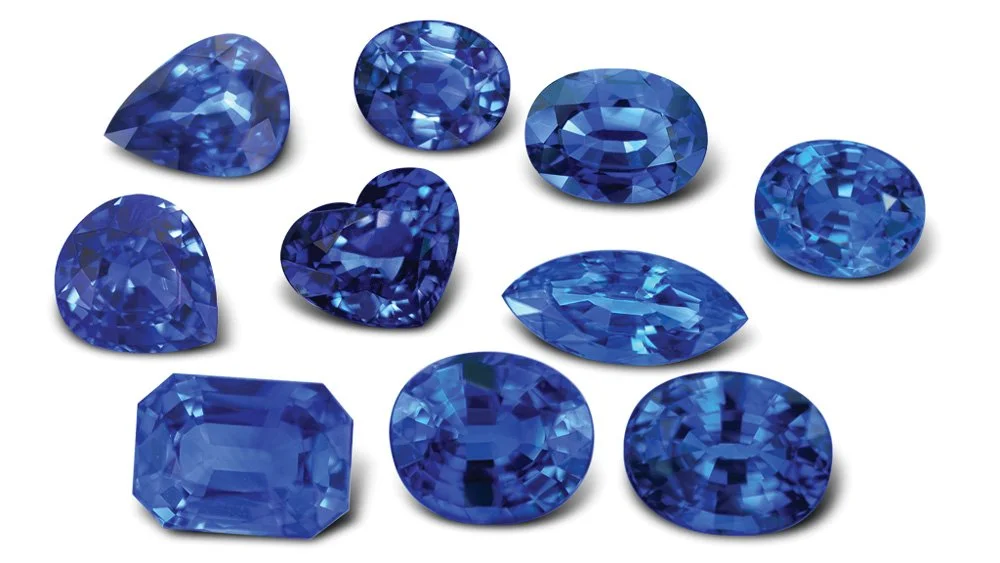
Royal Legacy – Sapphires have been treasured for centuries, famously worn by royalty such as Princess Diana, whose iconic engagement ring showcased a vivid blue sapphire, cementing the gem’s reputation for elegance and prestige.
Kashmir – Some of the most prized sapphires come from the Kashmir region of India, renowned for producing velvety, deep blue stones that are highly sought after by collectors.
Star Phenomenon – Certain sapphires, known as star sapphires, display asterism caused by needle-like rutile inclusions, creating a star-shaped effect on the surface when cut cabochon.
Hexagonal Crystals – Sapphires crystallize in the trigonal system, often forming hexagonal barrel-shaped or tabular crystals, which can be faceted to produce exceptional gemstones.
Fancy Colors – In addition to blue, sapphires occur in a range of colors, including pink, yellow, green, purple, and the rare pink-orange known as padparadscha, prized for its delicate and unique hue.
Facts – Mineral: Corundum Chemistry: Al₂O₃ Color: Most prized in vivid to deep blue; also occurs in pink, yellow, green, purple, and padparadscha pink-orange Refractive Index: 1.762 to 1.770 Birefringence: 0.008 to 0.010 Specific Gravity: 3.95 to 4.03 Mohs Hardness: 9
RUBY
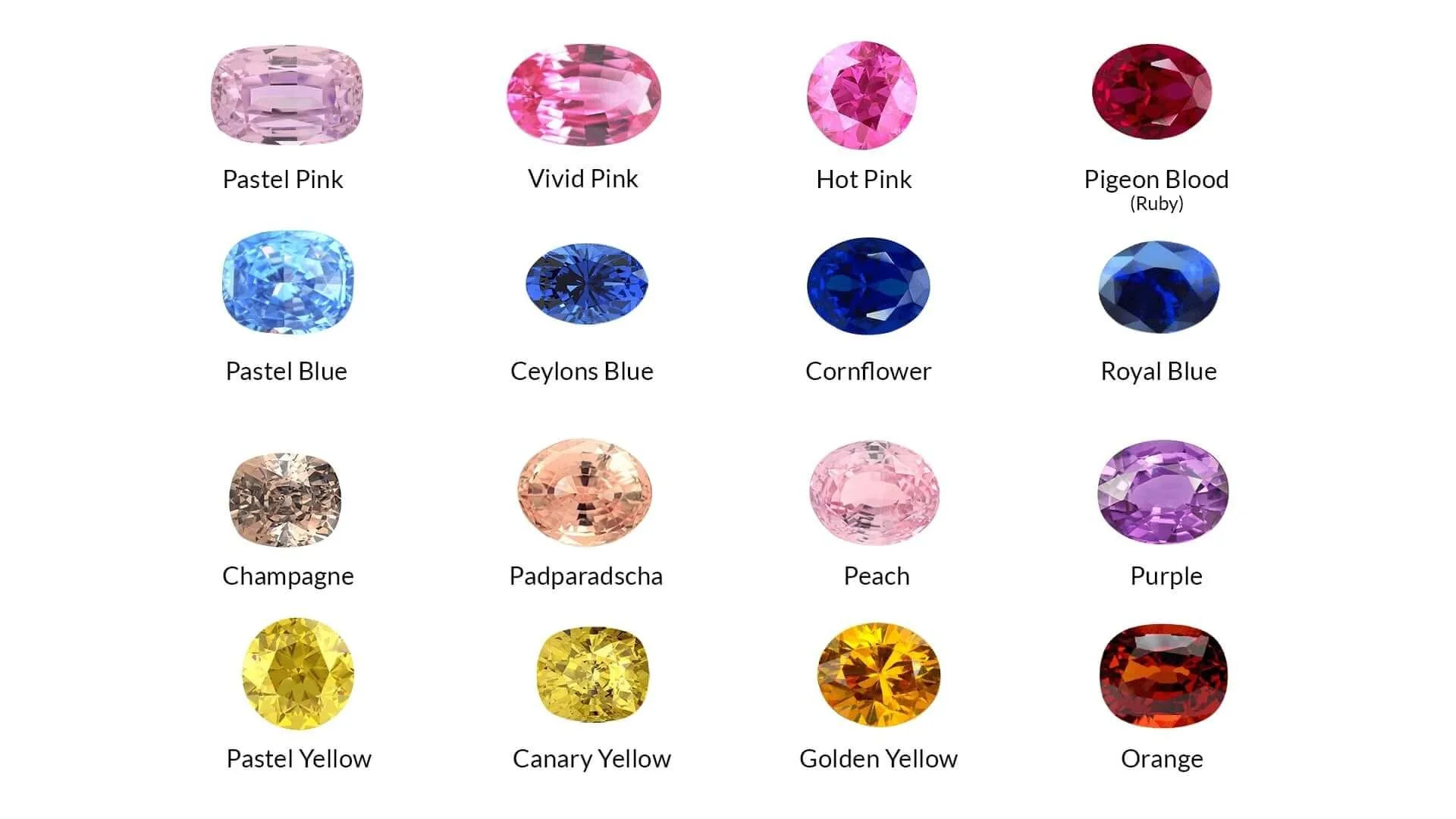
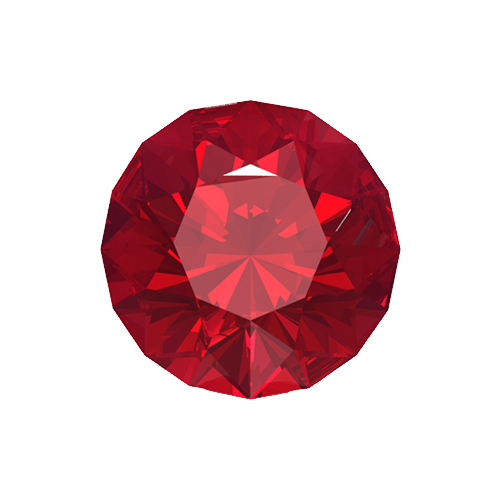
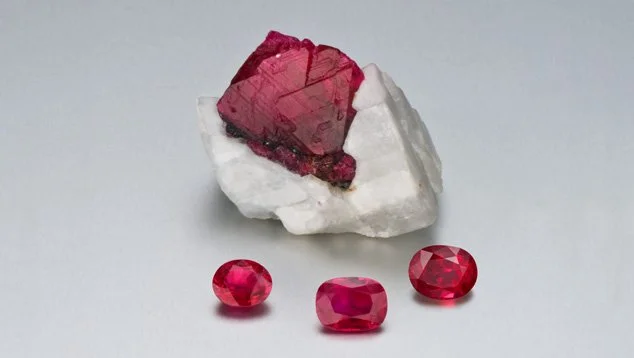
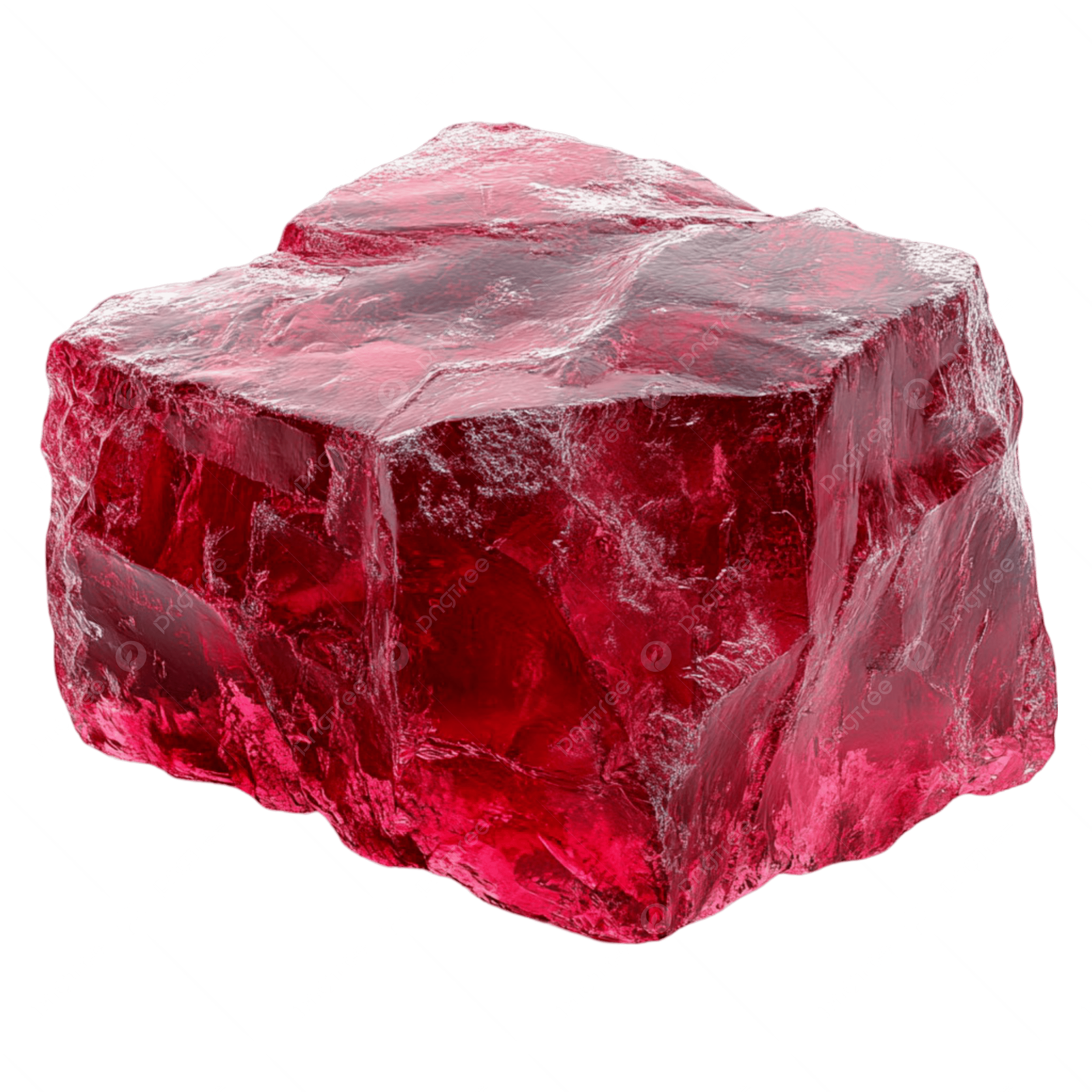
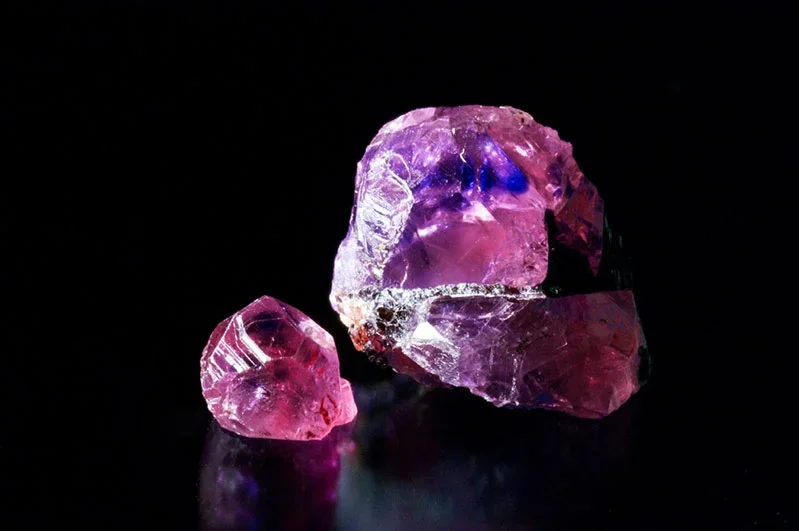
Ruby is the most prized red variety of the corundum mineral species, which also encompasses all sapphire colors.
-
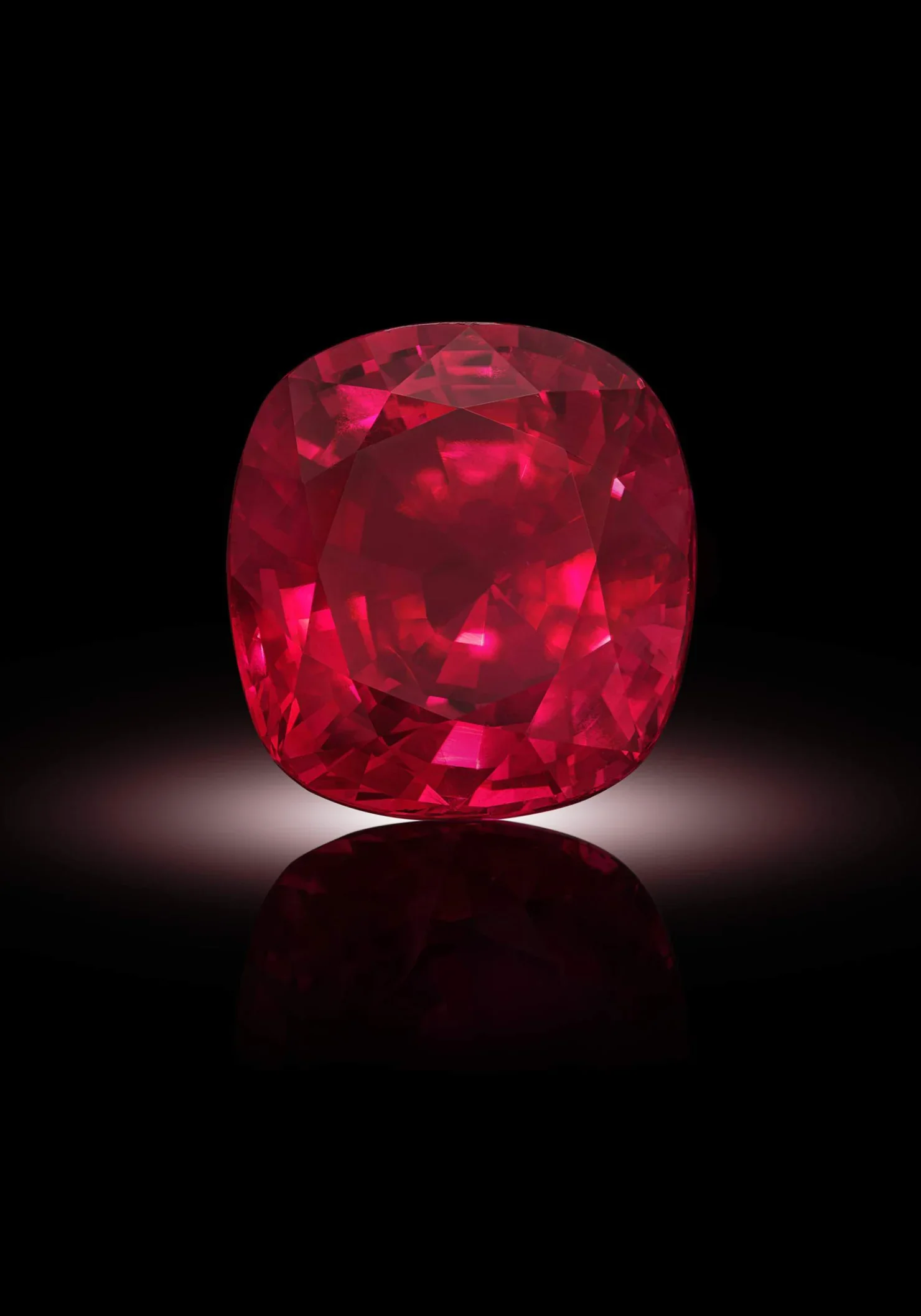
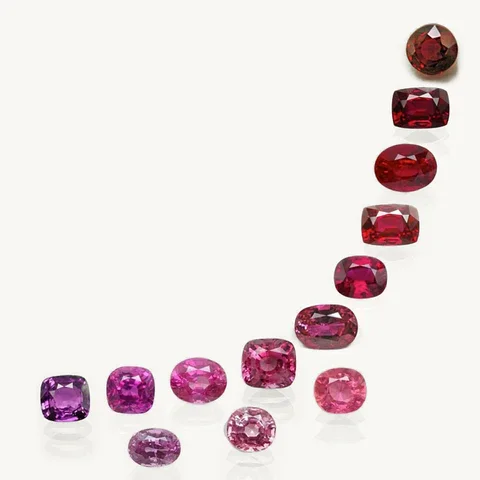
The most prized rubies display a vivid, pure red, often called “pigeon’s blood,” with strong saturation and medium to medium-dark tone. Slight variations can range from pinkish-red to deep crimson, and the presence of chromium gives the stone its characteristic red. Fine rubies may also exhibit red fluorescence in sunlight, intensifying their natural hue. Rubies that achieve the ideal colour command the highest prices in the colored stone market.
-
Rubies typically contain natural inclusions, such as rutile needles (silk), mineral crystals, or growth features, which are expected in natural stones. Eye-clean rubies—those with no inclusions visible to the unaided eye—are extremely rare and highly prized. While some inclusions can slightly affect transparency, they are often accepted as a mark of authenticity, and a balance of clarity and color determines the stone’s overall value.
-
Rubies are cut to enhance their color, brilliance, and overall appeal, with well-proportioned facets that maximize light return. The cut can also influence how the red hue appears, with expertly shaped stones showing more vivid, lively color. While rubies are often faceted in oval or cushion shapes, cabochon cuts are used for star rubies to highlight asterism caused by rutile inclusions.
-
Rubies become increasingly rare and valuable as size increases, especially when maintaining top-quality color and clarity. Their high density (specific gravity of 3.95–4.03) means that larger stones can appear smaller than other gems of equal weight, yet even modestly sized rubies can command significant prices. Exceptional rubies over 5 carats with vivid red color can sell for hundreds of thousands of dollars per carat, reflecting both their rarity and desirability.
Birthstones & Anniversaries
Ruby, the gemstone of summer, is the birthstone for July. It also represents the 15th and 40th wedding anniversaries.
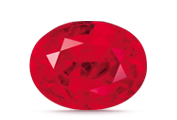
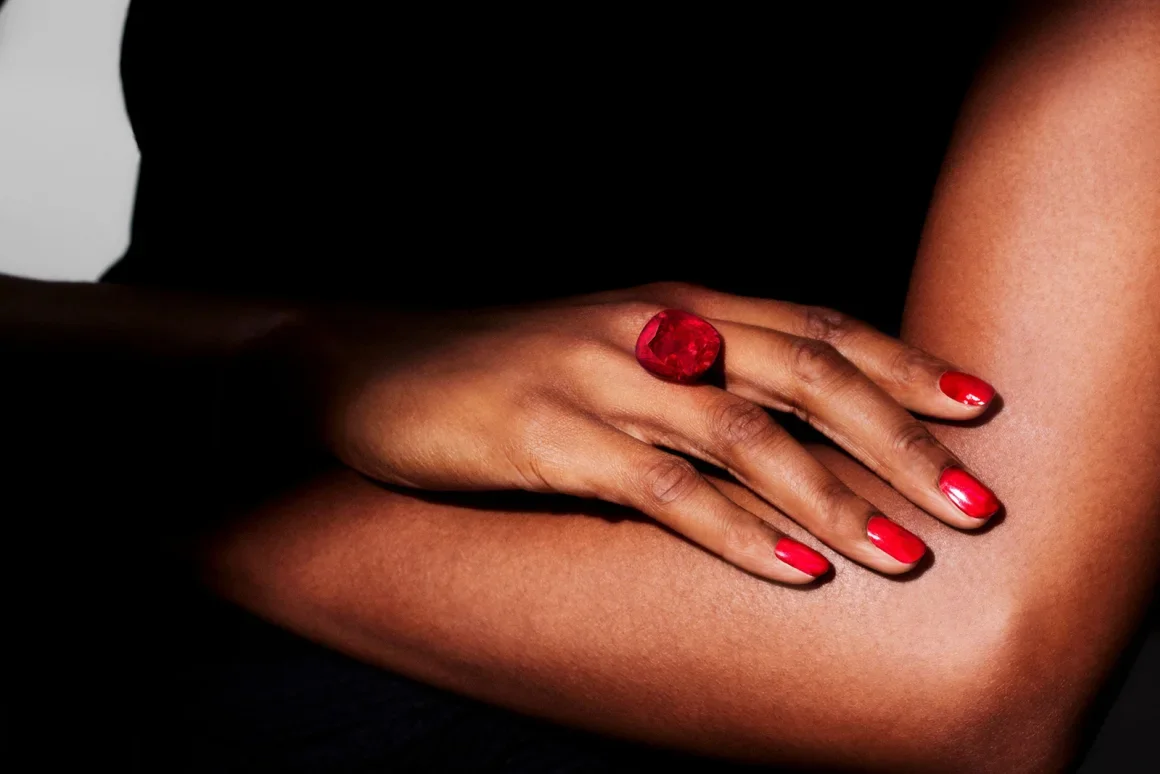
Rubies are the red variety of the mineral corundum (Al₂O₃). Corundum itself is crystalline aluminum oxide, and its other varieties include all non-red sapphires. The striking red color of rubies is primarily attributed to trace amounts of chromium (Cr). This element is responsible for the stone’s vivid hue, which can range from pinkish-red to deep, intense crimson depending on the exact chemical composition and trace element concentration.
The classification of rubies is closely tied to their color quality. While all rubies are corundum, not all red corundum qualifies as ruby. The defining characteristic of a ruby is its rich, saturated red color. Stones that are too light, pinkish, or lack intensity are typically classified as red sapphire rather than ruby. This color threshold is somewhat subjective, but it is generally agreed that a ruby must display a strong, vibrant red to earn its designation.
Rubies are also known for their natural inclusions, which can include rutile needles (called “silk”), mineral crystals, or other growth features formed during crystallization. Rather than detracting from value, these inclusions can provide evidence of authenticity and origin, making each ruby unique. While clarity is an important factor in ruby valuation, some inclusions are expected and accepted, unlike in other gemstones where inclusions may significantly lower value.
Rubies are typically found in specific geological environments, including metamorphic rocks such as marble and basalt, and are predominantly mined in regions such as Myanmar, Thailand, Sri Lanka, and Madagascar. Due to their rarity and the difficulty in finding large, high-quality stones, rubies are among the most prized and valuable gemstones in the world.
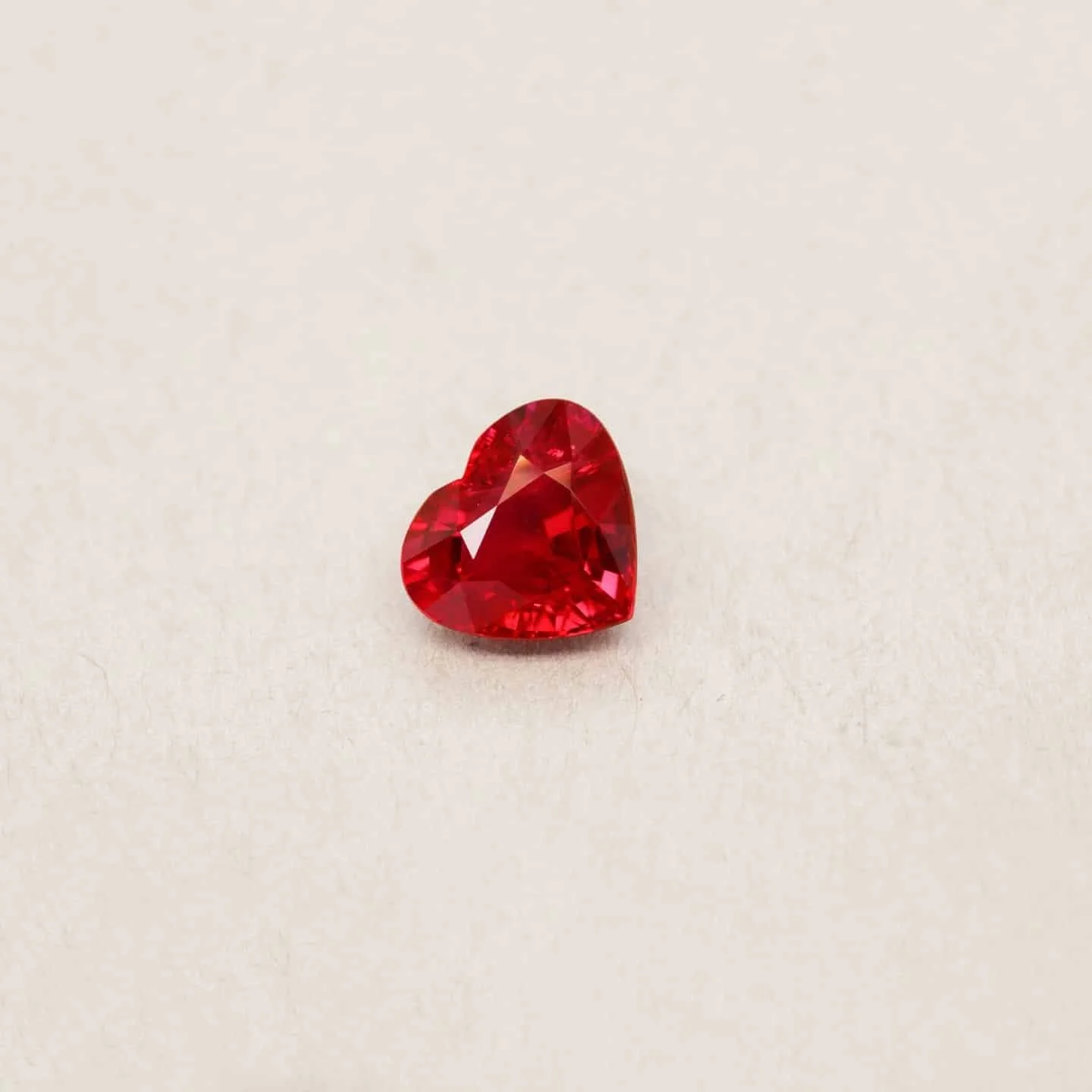
$32.4 million - On May 12, 2015, a 25.59-carat ruby ring sold for $1,266,901 per carat, setting a new record at auction for a colored gemstone.
Myanmar – Some of the most prized rubies come from Myanmar (Burma), famous for producing vivid, deep red stones often described as “pigeon’s blood,” which are highly sought after by collectors.
Fancy Colors – While rubies are defined by their red color, variations exist in tone and saturation. The rarest stones, such as deep pinkish-red rubies from Mogok, Myanmar, are highly prized, with subtle color
Star Phenomenon – Certain rubies, known as star rubies, display asterism caused by needle-like rutile inclusions, creating a star-shaped effect on the surface when cut cabochon.
Hexagonal Crystals – Rubies crystallize in the trigonal system, often forming hexagonal barrel-shaped or tabular crystals, which can be faceted into exceptional gemstones.
Royal Legacy – Rubies have been treasured for centuries, famously worn by monarchs such as Queen Elizabeth II, who included them in coronation jewelry, highlighting the gem’s enduring prestige and historical significance.
Facts – Mineral: Corundum Chemistry: Al₂O₃ Color: Vivid red to deep crimson; also pinkish-red Refractive Index: 1.762 to 1.770 Birefringence: 0.008 to 0.010 Specific Gravity: 3.95 to 4.03 Mohs Hardness: 9 differences significantly affecting value.
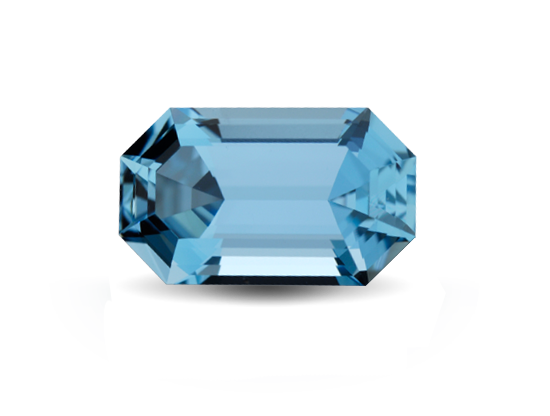
AQUAMARINE
The name “aquamarine” comes from two Latin words: aqua, meaning “water,” and marina, meaning “of the sea.”
While aquamarine is primarily valued for blue tones, very pale greenish-blue stones exist but are generally less desirable. The most sought-after are medium to dark blue with strong saturation, especially those from the Santa Maria region.
-
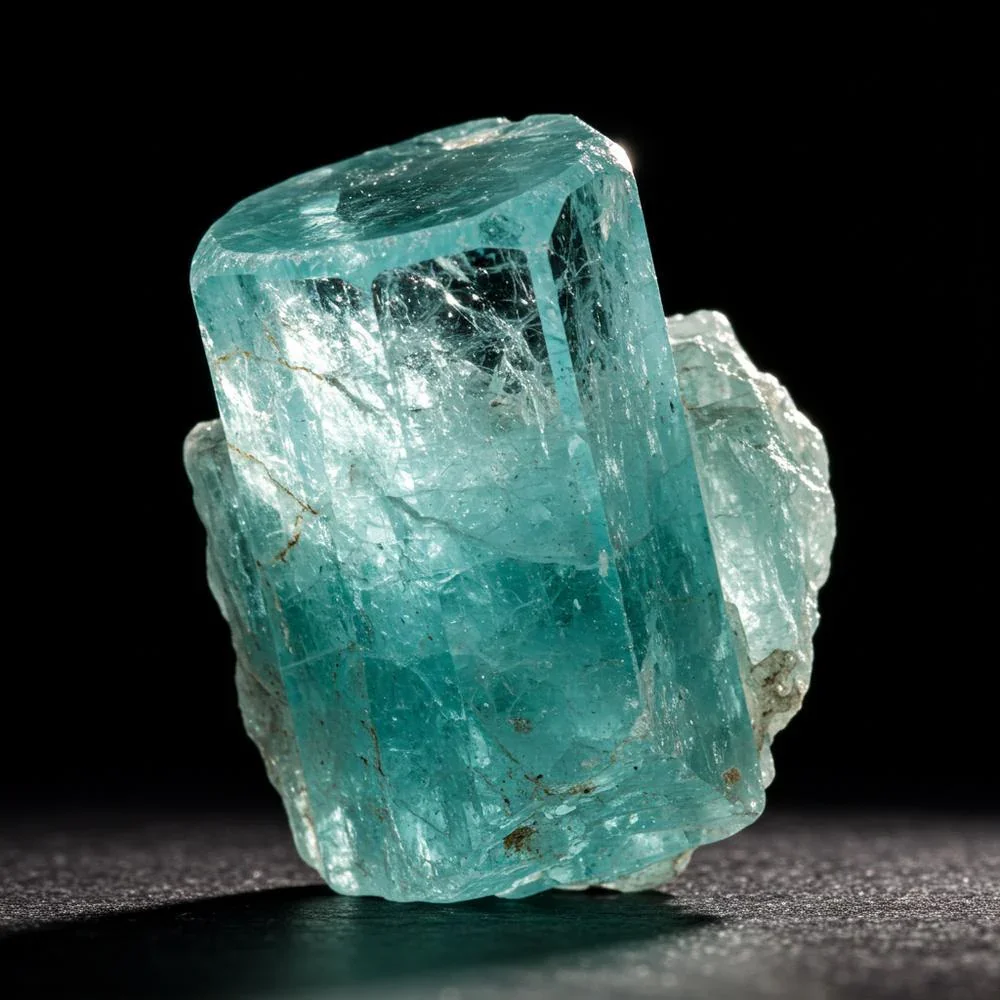
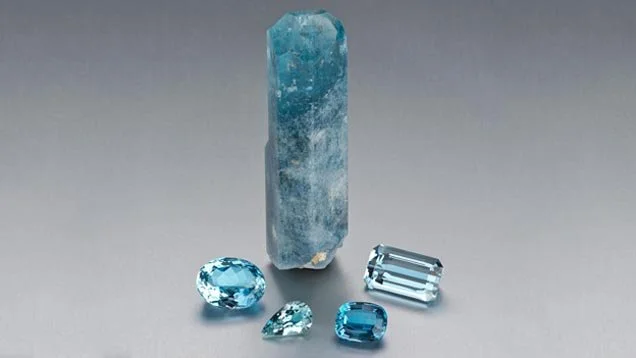
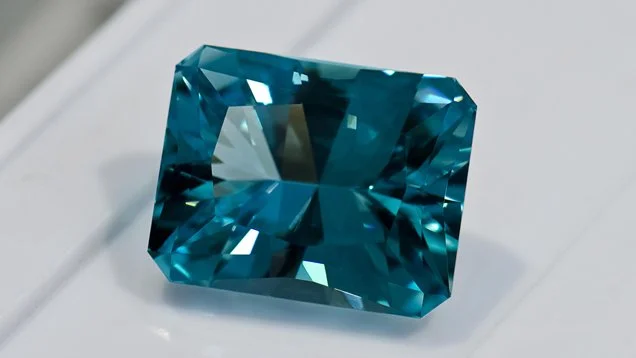
Aquamarine’s color range is relatively narrow, spanning blue, slightly greenish blue, greenish blue, strongly greenish blue, or green-blue. The most prized stones display a moderately strong dark blue to slightly greenish blue, with greater intensity and purity significantly increasing value. Light greenish-blue aquamarines are more common and generally less valuable. Among the most desirable is the “Santa Maria” variety from Brazil, renowned for its deep, vivid blue hue and highly sought after by collectors and connoisseurs.
-
Most faceted aquamarines are eye-clean, with few or no visible inclusions. Stones showing inclusions are usually cut as cabochons, beads, or carvings. The gem is pleochroic, showing near-colourless and strong blue tone.
-
Aquamarines are cut to maximize both colour and carat weight, often in emerald, oval, or cushion shapes. The table facet is aligned parallel to the crystal’s length to highlight the stone’s strong blue pleochroic colour while retaining the most weight.
-
Aquamarines are relatively large gemstones, and fine-quality stones over 10 carats are not uncommon. Because of their moderate density (specific gravity 2.68–2.74), larger stones maintain excellent transparency and color, with value increasing for more intensely colored and eye-clean gems.
Birthstones & Anniversaries
Aquamarine, the gemstone of spring, is the birthstone for March. It also represents the 19th and 24th wedding anniversaries.
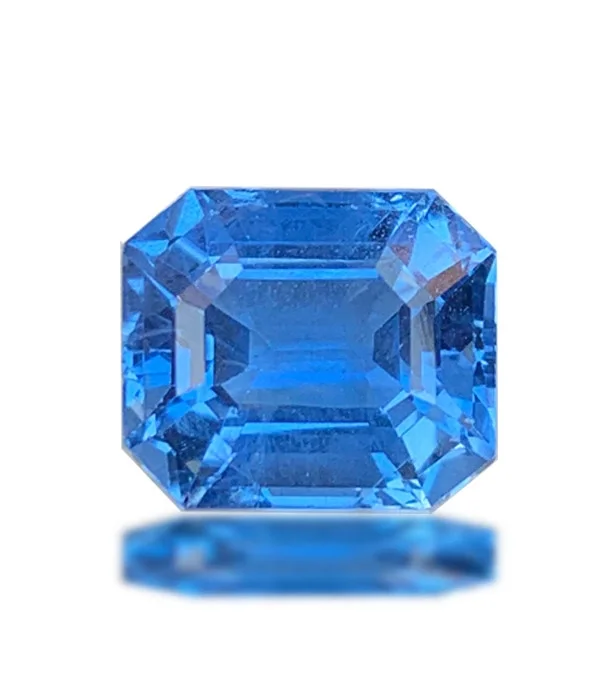
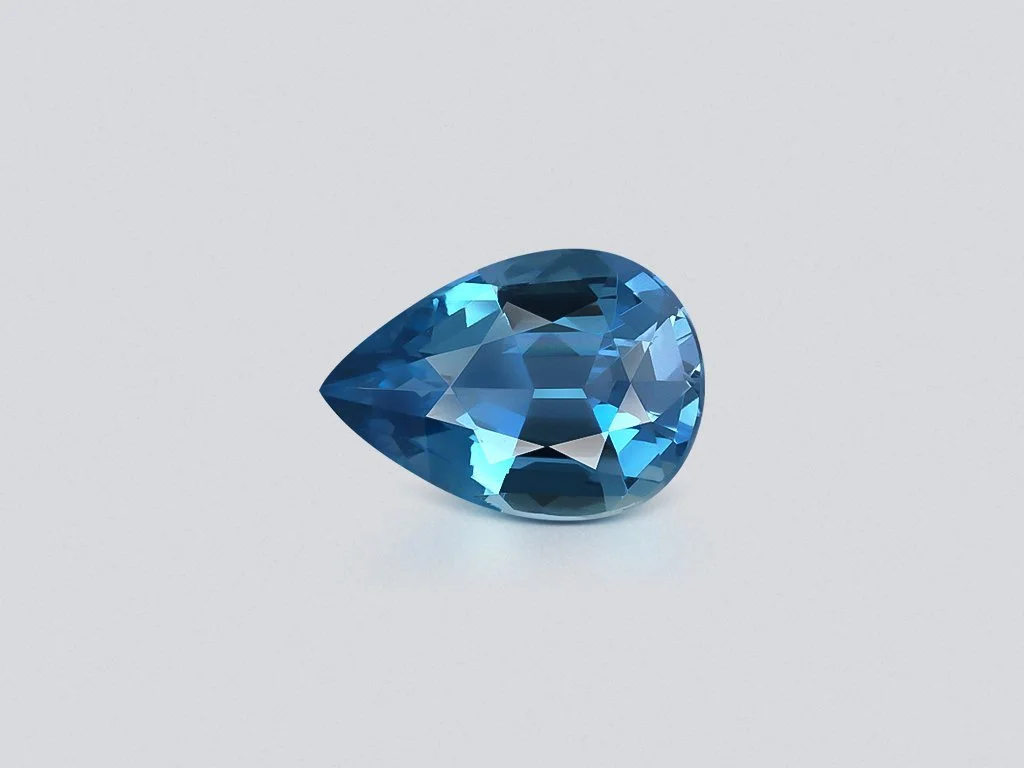
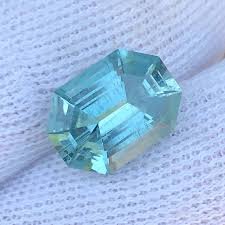
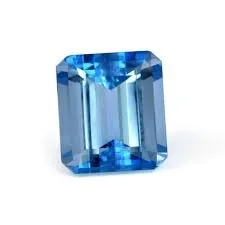
Aquamarines are the blue to slightly greenish-blue variety of the mineral beryl (Be₃Al₂(SiO₃)₆). Beryl itself is a beryllium aluminum silicate, and its various forms include emerald, morganite, and heliodor. The striking blue color of aquamarine is primarily attributed to trace amounts of iron (Fe²⁺ and Fe³⁺), which influence the stone’s hue, ranging from pale greenish-blue to deep, vivid blue depending on the exact chemical composition and concentration of iron.
The classification of aquamarines is closely tied to their color quality. While all aquamarines are beryl, not all blue or greenish-blue beryls qualify as fine aquamarine. The defining characteristic of high-quality aquamarine is a clear, moderately strong to deep blue color. Stones that are too light, pale, or overly greenish are generally considered less desirable. This color threshold is somewhat subjective, but it is widely agreed that aquamarine must display a strong, transparent blue to earn its designation as a premium gemstone.
Aquamarines are also known for their exceptional clarity. Most faceted stones are eye-clean, with very few visible inclusions. Occasional crystals may contain liquid inclusions, but these are uncommon in finished gems. Rather than detracting from value, the presence of minimal inclusions is considered part of the gem’s natural identity, and eye-clean transparency is a hallmark of fine aquamarine. Additionally, aquamarine is pleochroic, showing near-colorless and strong blue tones in different crystal directions, which is carefully considered when cutting to maximize both color and weight.
Aquamarines are typically found in specific geological environments, most notably in granitic pegmatites and hydrothermal veins, and are predominantly mined in regions such as Brazil, Nigeria, Madagascar, and Mozambique. Due to their combination of size, clarity, and desirable blue color, aquamarines are among the most prized and widely collected gemstones in the world.
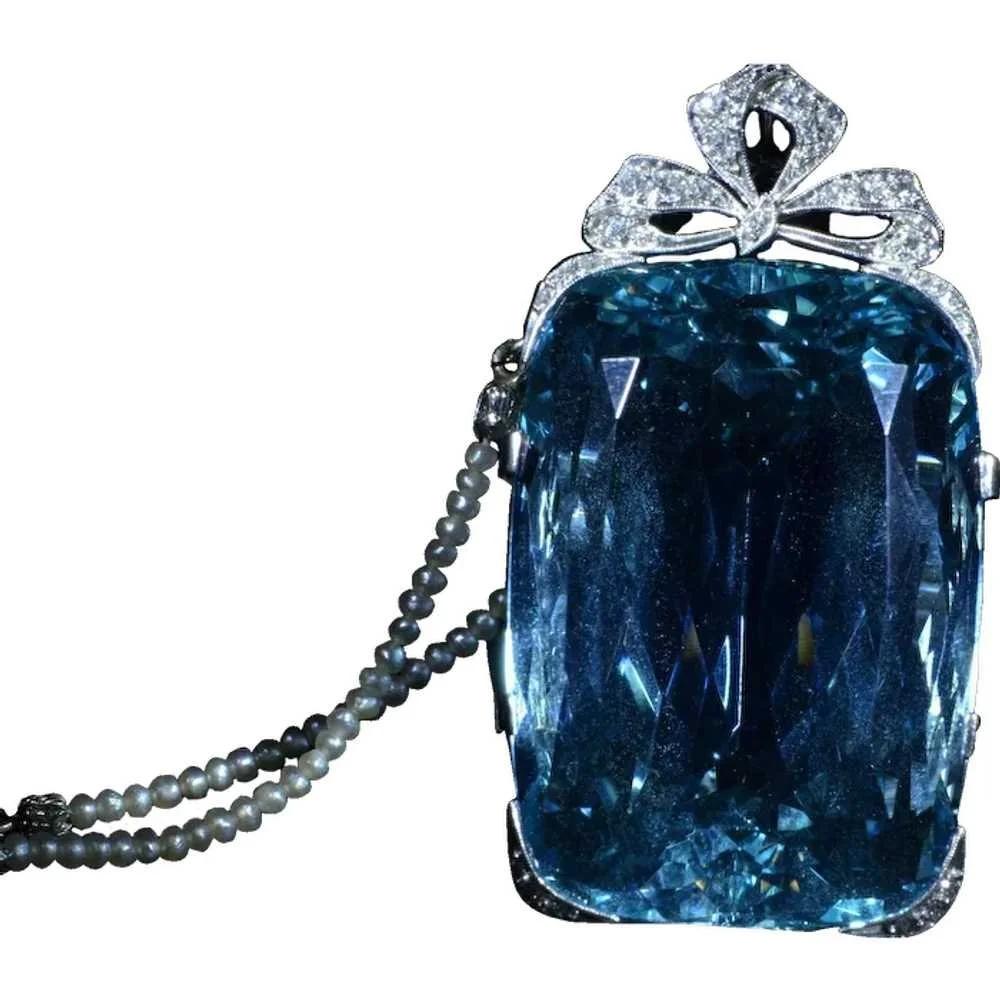
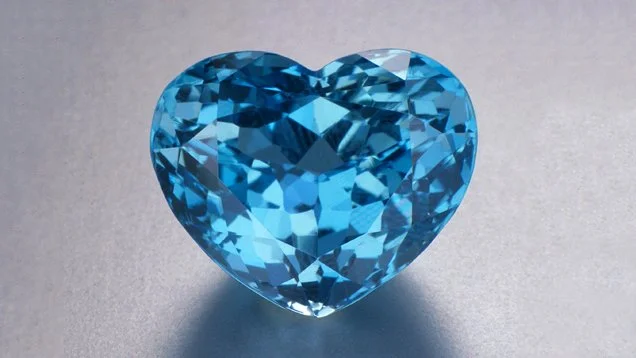
Santa Maria – Some of the most prized aquamarines come from the Santa Maria mines in Brazil, known for producing deep, vivid blue stones highly sought after by collectors.
Liquid Inclusions – Occasional aquamarine crystals may contain tiny liquid inclusions, but most finished gems are eye-clean and free of visible clarity features.
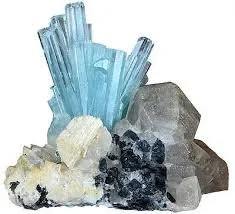
Hexagonal Crystals – Aquamarine crystallizes in the hexagonal system, forming long, prismatic crystals that can be cut into exceptional faceted gemstones.
Historical Legacy – Aquamarine has been valued since ancient times, with the first known references dating back to early Roman texts. The gem has also appeared in royal collections, including the Russian Imperial family, where large aquamarines were fashioned into necklaces and ceremonial jewelry.
Facts – Mineral: Beryl Chemistry: Be₃Al₂(SiO₃)₆ Color: Blue to slightly greenish blue, with Santa Maria stones prized for deep vivid blue Refractive Index: 1.577 to 1.583 Birefringence: 0.005 to 0.009 Specific Gravity: 2.68 to 2.74 Mohs Hardness: 7.5 to 8
TOURMALINE
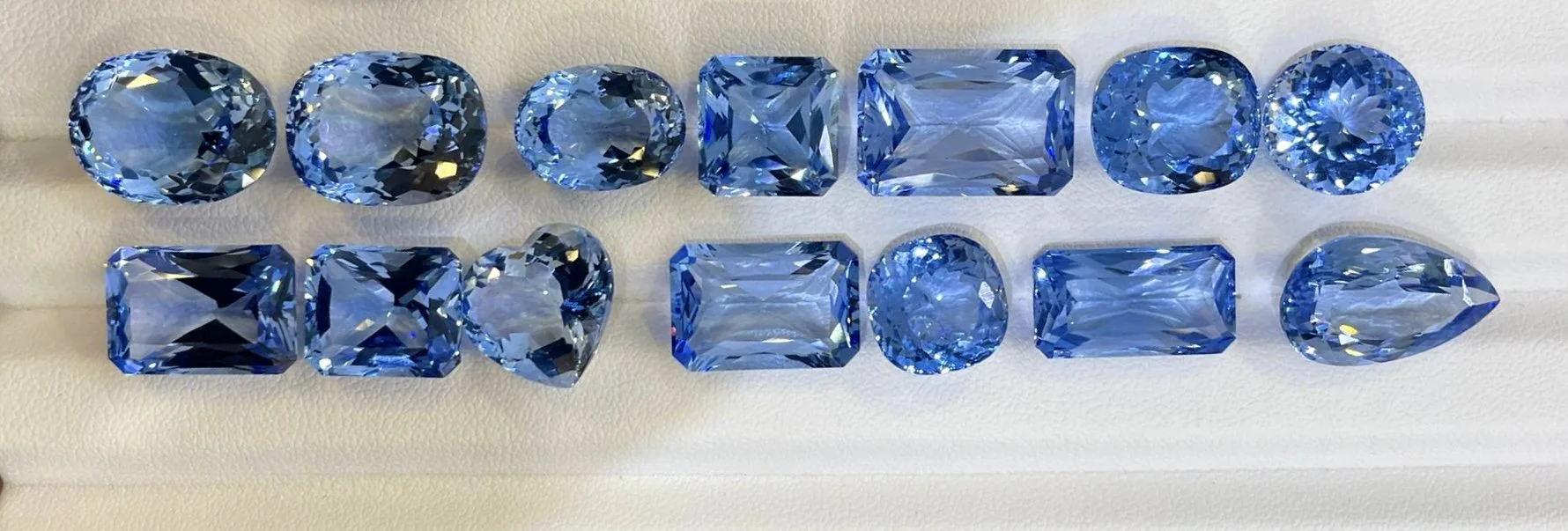
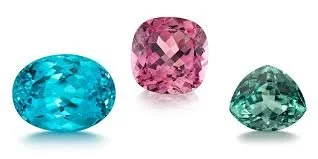
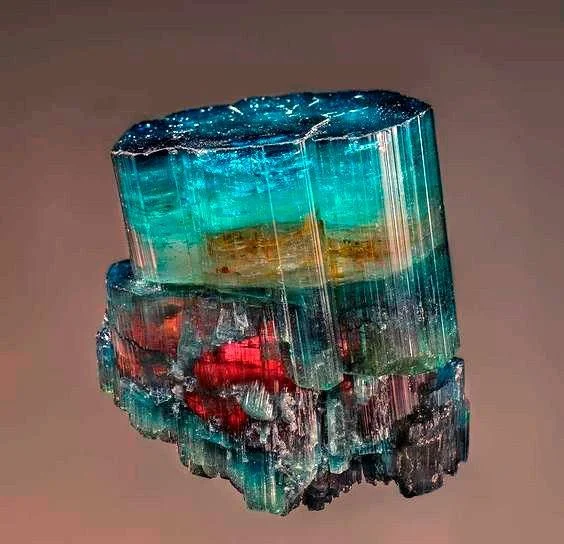
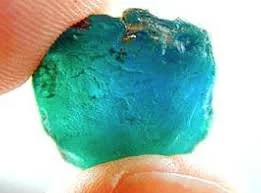
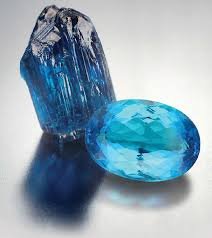
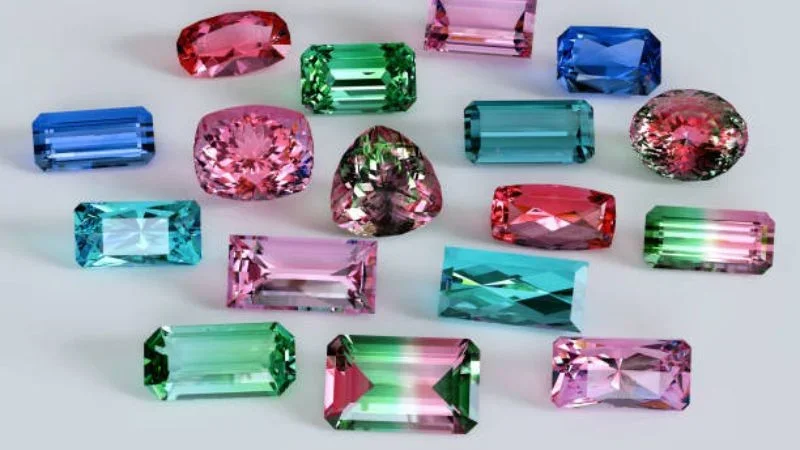
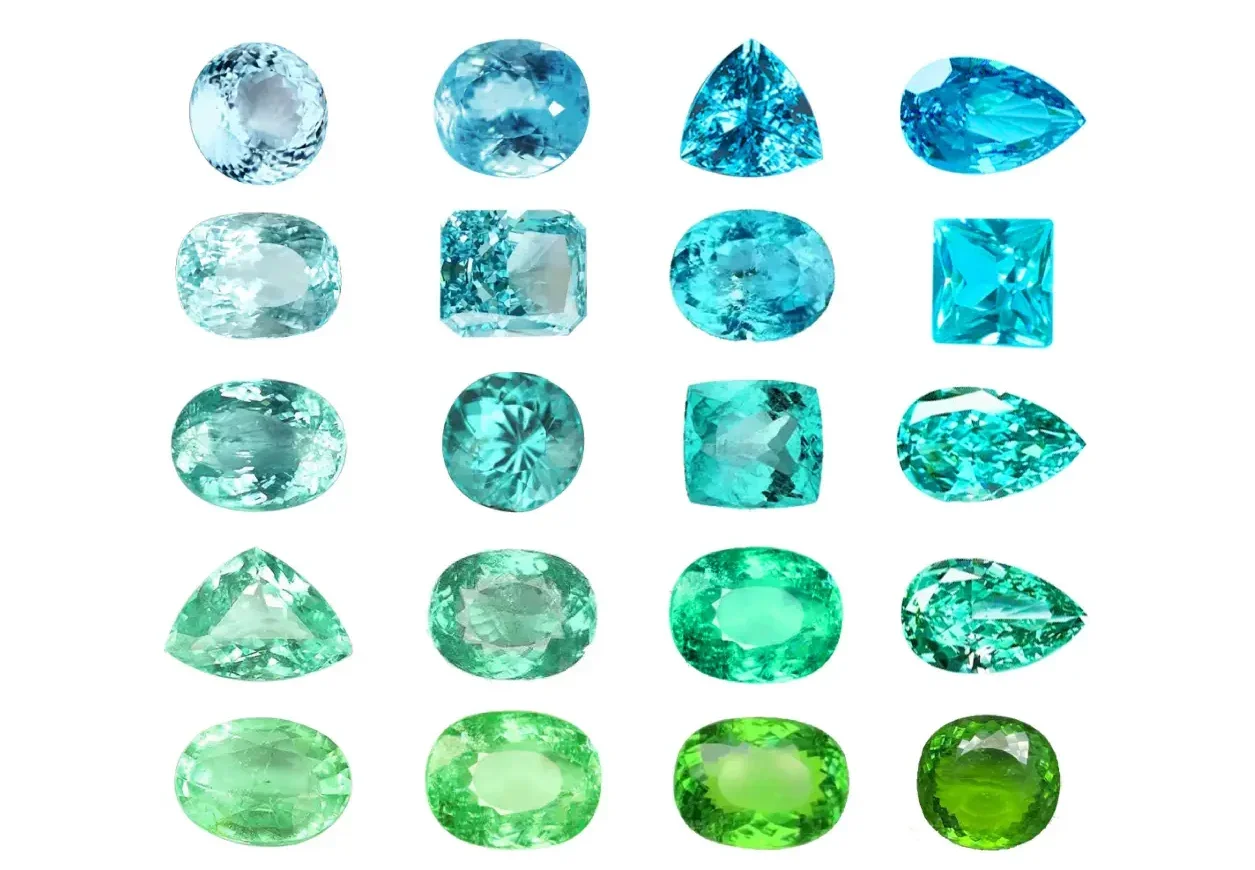
Tourmalines display one of the widest color ranges of any gemstone. They occur in virtually every hue, including pink, red, green, blue, yellow, and bi-colour varieties. Among these , Paraiba tourmalines are especially prized for their intense, neon-like blue and green, making them some of the most sought-after gems in the world.
-
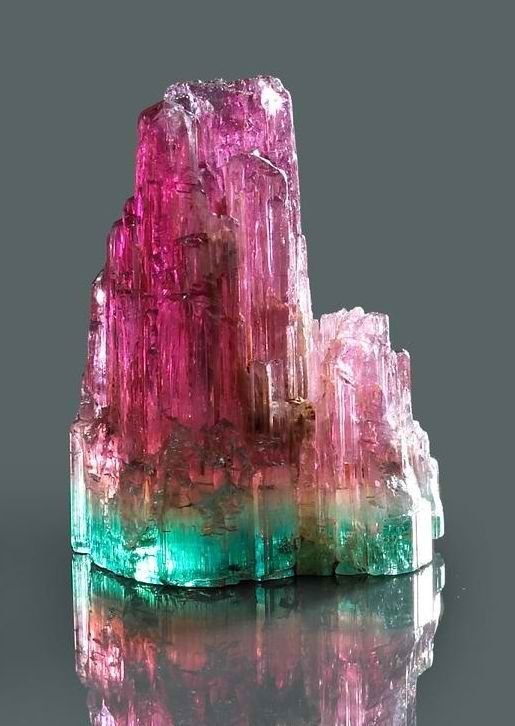
Tourmaline exhibits one of the most diverse color ranges of any gemstone, with hues determined by trace elements such as iron, manganese, and copper. It occurs in greens, pinks, reds, yellows, blues, and unique multi-colored stones, including the famous “watermelon” tourmaline with its pink center and green rim. Among these, copper-bearing Paraíba tourmalines are especially prized for their vivid, electric blue and green tones.
-
Tourmalines are generally eye-clean, though minor liquid, gas, or crystal inclusions can occur. Red and pink stones may retain high value despite small inclusions, while green stones are expected to be cleaner. Prominent or surface-reaching inclusions reduce value, but subtle internal features are often accepted.
-
Tourmalines are typically cut to maximize color and retain weight, often as ovals, cushions, or emerald shapes. Because the crystal is elongated and prismatic, cutters must align the table with the length of the crystal to showcase the best colour while minimising waste. Faceting also enhances the gem’s brilliance and the visibility of any play-of-colour in multi-coloured stones like watermelon tourmaline.
-
Tourmaline has a specific gravity of approximately 3.06–3.25, making it slightly less dense than diamond (3.52). Crystals can grow large, producing gemstones well over 10 carats, with size rarely compromising clarity or colour. Stones with vivid hues—especially Paraiba tourmaline—see a proportionally higher value per carat as size increases.
Tourmalines are a group of boron silicate minerals (general formula: XY₃Z₆(BO₃)₃Si₆O₁₈(OH)₄) that exhibit one of the widest color ranges of any gemstone. The color of tourmaline is influenced by trace elements within its crystal structure: iron produces green and blue tones, manganese generates pink and red hues, while copper gives rise to the intense neon-blue and green of Paraíba tourmalines. Because of this chemical versatility, tourmalines occur in virtually every hue, including bi-color and multi-colored varieties such as the famed watermelon tourmaline, with its pink center and green rim.
The classification of tourmalines is closely tied to their color intensity. While all tourmalines are chemically related, not every colored crystal is equally desirable. Stones with vivid, saturated hues—especially the copper-bearing Paraíba varieties—are the most prized. Lighter, pale, or less intense colors are generally considered less rare and command lower value, while multi-colored or rare hues can be highly collectible.
Tourmalines are generally eye-clean, though inclusions can occur during crystal growth. Typical features include fine liquid or gas inclusions, tiny crystals, or hollow growth tubes. In red and pink tourmalines, minor inclusions rarely detract from value if the color is strong, while green stones are expected to be cleaner. Prominent or surface-reaching inclusions reduce value, but subtle internal features are often accepted as part of the gem’s natural character.
Tourmalines are typically cut to showcase their color while preserving weight. The prismatic, elongated crystal habit means that cutters usually align the table along the length of the crystal, producing ovals, cushions, or emerald cuts that optimize color saturation and brilliance. Multi-colored stones, such as watermelon tourmalines, are carefully oriented to display their color zoning to maximum effect.
Tourmalines can form exceptionally large crystals, often producing stones exceeding 10 carats. With a specific gravity of 3.06–3.25, tourmaline is slightly less dense than diamond (3.52) or sapphire (3.95–4.03), allowing large stones to feel balanced and substantial in jewelry. Vividly colored, large tourmalines—particularly Paraíba and watermelon varieties—command premium prices on a per-carat basis due to their rarity and visual impact.
Tourmalines are typically found in granitic pegmatites and metamorphic rocks, with notable sources including Brazil, Mozambique, Nigeria, Afghanistan, and Madagascar. Paraíba tourmalines are specifically from copper-rich deposits in Brazil and Mozambique, which produce their signature electric colors. Due to their rarity, vibrant color range, and striking multi-colored patterns, tourmalines are among the most versatile and coveted gemstones for collectors and connoisseurs worldwide.
Birthstones & Anniversaries
Tourmaline is one of the birthstones for October, alongside opal, celebrated for its extraordinary range of colors. It also marks the 8th wedding anniversary, symbolizing creativity, balance, and enduring vitality through its diverse and vibrant hues.
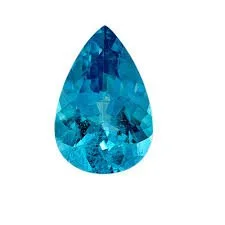
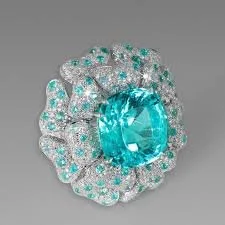
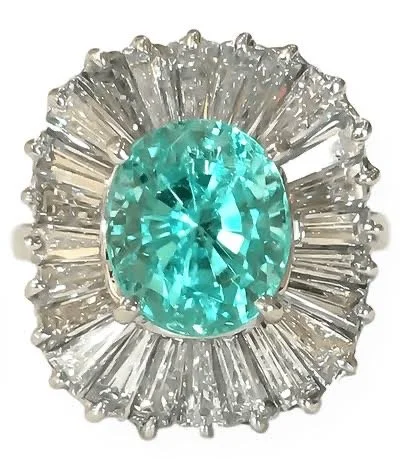
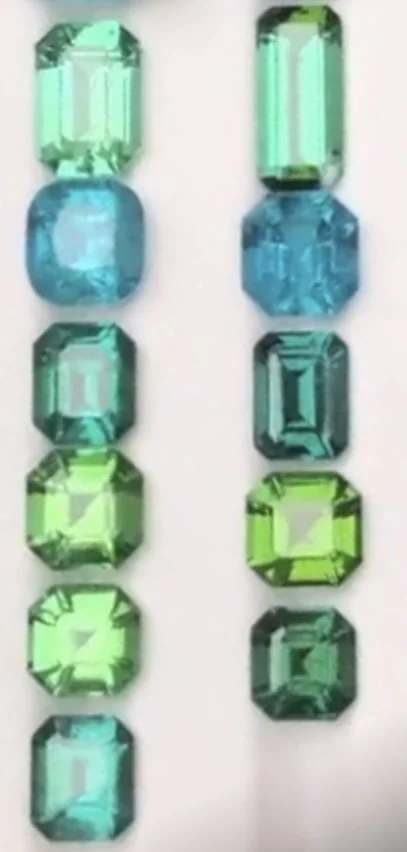
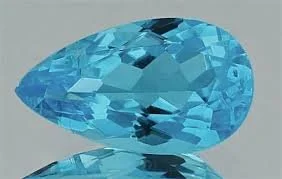
Brazil & Mozambique – Some of the most prized tourmalines come from Brazil and Mozambique, including the legendary Paraíba mines, known for producing stones with intense, neon-like blue and green colors. Large, eye-clean crystals with vivid saturation command exceptionally high prices.
Color Diversity – Tourmalines display one of the widest color ranges of any gemstone. They appear in pink, red, green, blue, yellow, and multi-colored forms, including the famed watermelon tourmaline, with its pink center and green rim. The color is determined by trace elements such as iron, manganese, and copper, with copper producing the electric hues of Paraíba tourmalines.
Crystal Formation – Tourmalines crystallize in the trigonal system, typically forming elongated prismatic crystals. Their colors and patterns result from variations in chemical composition along the crystal axis, and in multi-colored stones, distinct zones can form naturally during growth. Proper orientation during cutting is key to maximizing both color and brilliance.
Royal & Historical Legacy – Tourmalines have been admired for centuries for their extraordinary colors. While Paraíba tourmalines were only discovered in the late 1980s, they quickly became highly sought after by collectors and luxury jewelers worldwide. Watermelon and bi-color tourmalines have long been prized for their striking, natural patterns.
Fancy Colors – While green and pink-red tourmalines are the most common, rarer varieties include copper-bearing Paraíba blues and greens, pastel tones, and multi-colored bi-color or watermelon stones. These rare gems are highly prized for their vivid, saturated hues and natural, eye-catching patterns.
Facts – Mineral: Tourmaline Chemistry: XY₃Z₆(BO₃)₃Si₆O₁₈(OH)₄ Color: Pink, red, green, blue, yellow, bi-color/multi-color Refractive Index: 1.614 to 1.666 Birefringence: 0.018 to 0.040 Specific Gravity: 3.06 to 3.25 Mohs Hardness: 7 to 7.5
OPAL
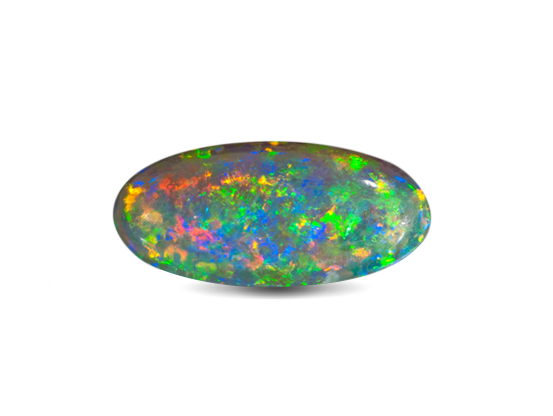
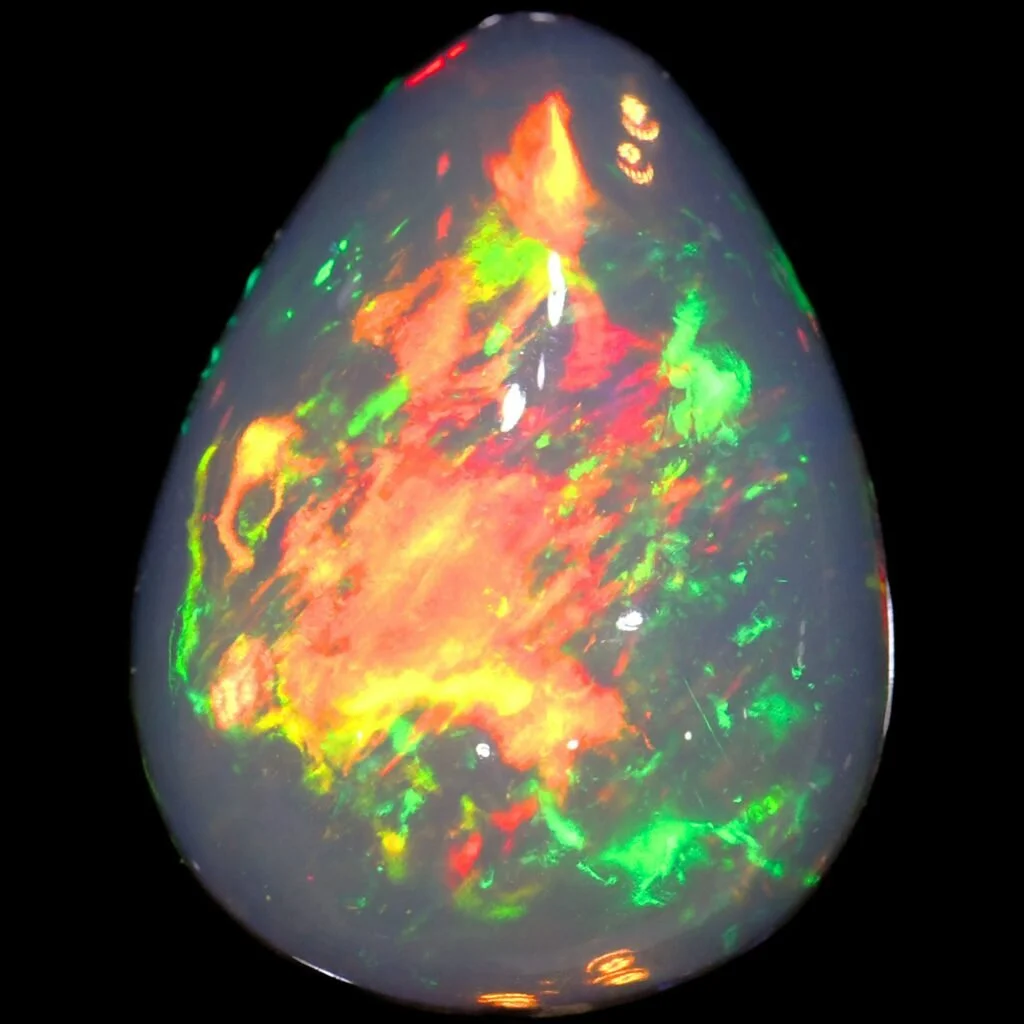
Fireworks. Jellyfish. Galaxies. Lightning. Opal’s shifting play-of-color, a kaleidoscope of vibrant hues, makes it truly unique among gemstones.
Opal is prized for its striking display of shifting rainbow colors, known as play-of-color. Opals are broadly divided into two types: precious and common, with only precious opals exhibiting play-of-color.
This phenomenon occurs because precious opal is made of tiny, sub-microscopic spheres arranged in a regular, grid-like pattern. Light traveling through these spheres bends and diffracts, breaking into spectral colors and creating the gem’s characteristic play-of-color.
-
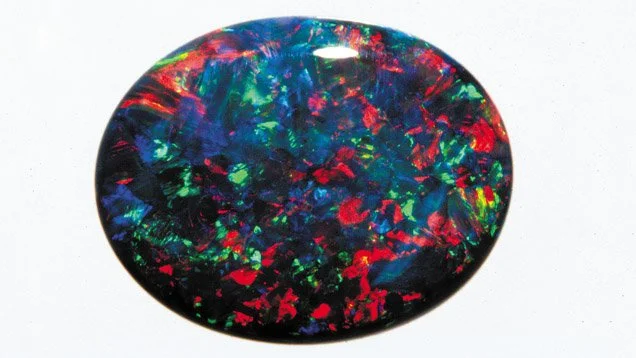
Opal’s color is defined by its play-of-color, a shifting display of rainbow hues that can include red, orange, yellow, green, blue, indigo, and violet. The most prized opals display bright, multi-colored flashes with strong contrast against the bodycolor, whether it is light, dark, or transparent. Stones that show vibrant reds and a broad spectrum of colors are considered the most valuable, while those with weak or limited color play are generally less desirable.
-
Opals are generally translucent to semi-transparent, and most precious opals contain few visible inclusions. Some stones may show natural fissures, potch layers, or tiny internal fractures, which are considered part of the gem’s natural character. Unlike other gemstones, minor inclusions rarely detract from value, and eye-clean transparency combined with strong play-of-color is most prized.
-
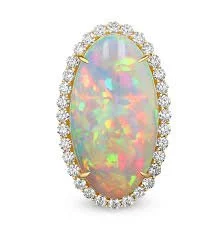
Opals are typically cut as cabochons to best display their play-of-color, with the dome-shaped top enhancing the shifting flashes of rainbow hues. Transparent or crystal opals may also be faceted to showcase depth and brilliance. The orientation of the stone is carefully considered so that the strongest color flashes appear when viewed from above. Care should be taken to distinguish natural opals from assembled stones such as doublets or triplets, which combine thin opal layers with other materials and can be more fragile.
-
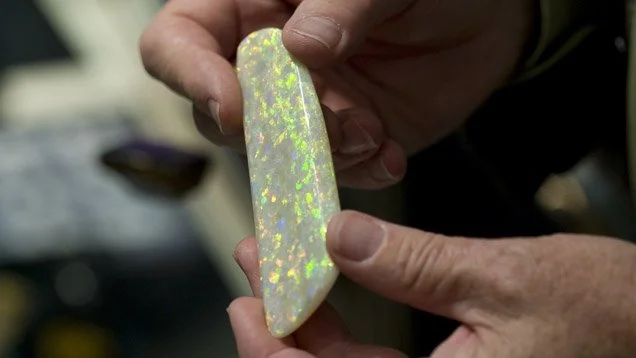
Opals are generally lighter than many other gemstones due to their lower density (specific gravity 1.98–2.25). Larger opals are rare, especially those with strong play-of-color across the entire surface. Value increases significantly with size when combined with vibrant color and high transparency, making large, eye-catching specimens highly prized.
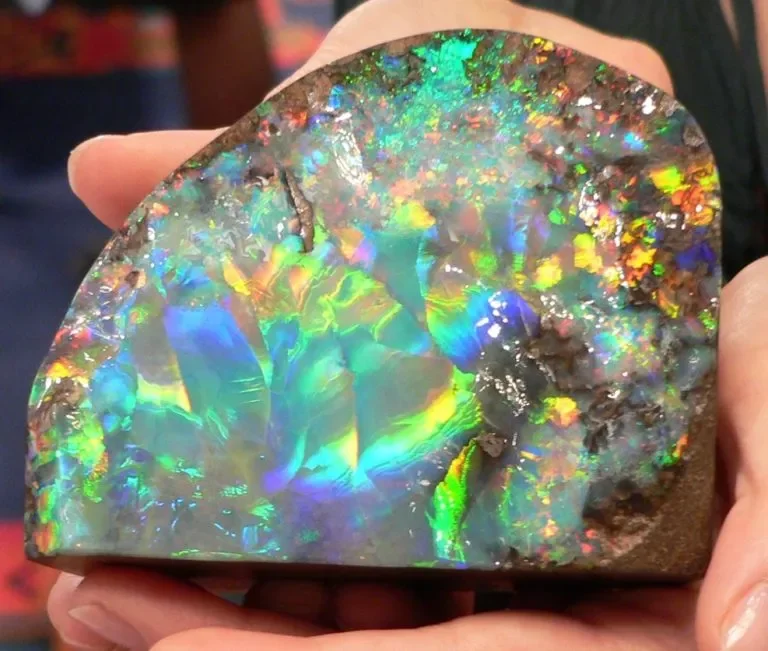
Opals are hydrated silica gemstones (SiO₂·nH₂O) known for their unique display of flashing rainbow colors, called play-of-color. Silica itself is a silicon dioxide compound, and its various forms include common opal, precious opal, and potch. The striking play-of-color in precious opals is primarily caused by sub-microscopic silica spheres arranged in a regular, grid-like pattern. Light waves passing through these spheres bend and diffract, breaking into spectral colors and producing the gem’s characteristic flashes of red, blue, green, and other hues.
The classification of opals is closely tied to their play-of-color. While all precious opals are silica, not all opals exhibit the optical phenomenon. The defining characteristic of high-quality opal is a vibrant, shifting play-of-color against a clear, light, or dark bodycolor. Stones that lack sufficient color flashes, appear dull, or are uniformly opaque are generally considered common opal rather than precious opal. This threshold is somewhat subjective, but it is widely agreed that a gem must display strong, varied spectral colors to earn its designation as a premium opal.
Opals are also known for their variable transparency and water content. Many opals are translucent to semi-transparent, and some contain natural inclusions, cracks, or potch layers. Rather than detracting from value, these characteristics are considered part of the gem’s natural identity, giving each stone a unique character. The play-of-color and bodycolor are carefully considered when cutting opal to maximize both visual effect and retained weight.
Opals are typically found in specific geological environments, most notably in sedimentary deposits and silica-rich volcanic rocks. They are predominantly mined in regions such as Australia, Ethiopia, Mexico, and Brazil. Due to their extraordinary play-of-color, variety of forms, and rarity of fine-quality specimens, opals are among the most prized and visually captivating gemstones in the world.
Birthstones & Anniversaries
Opal, the gemstone of Autumn, is the birthstone for October. It also represents the 14th and 22nd wedding anniversaries.
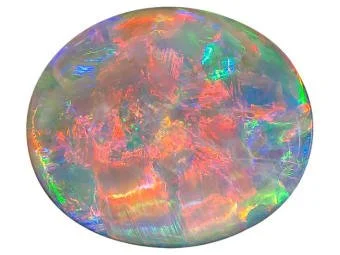
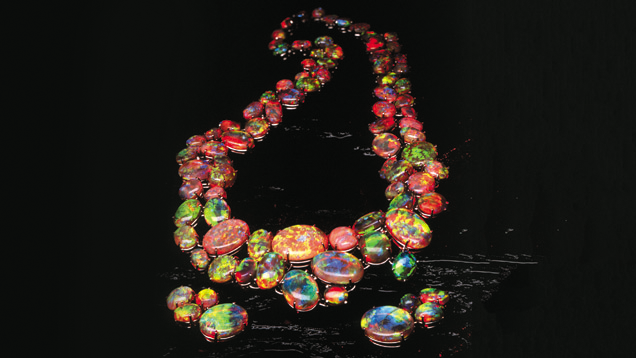
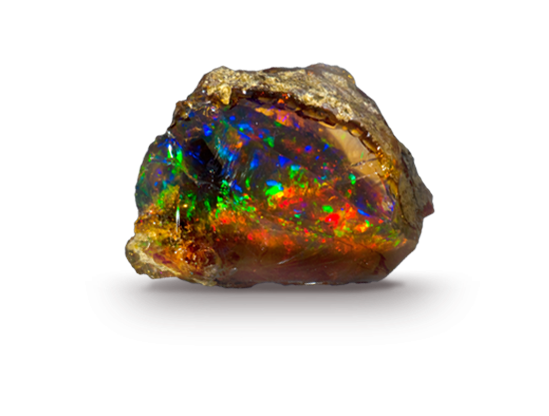
Wollo & Shewa – Some of the most prized opals come from Ethiopia, particularly the Wollo and Shewa regions, known for producing stones with vibrant play-of-color over light to dark bodycolors. Fine Ethiopian opals can command high prices, especially large, eye-clean stones with strong, shifting colors.
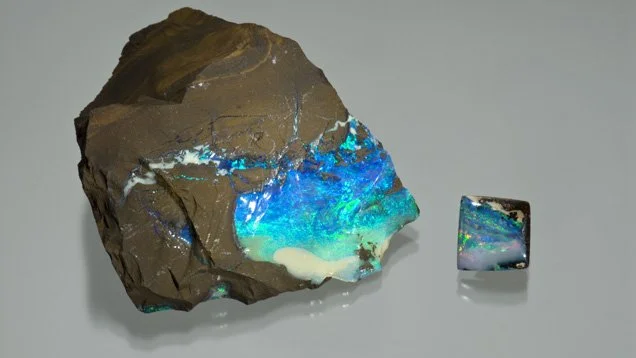
Lightning Fields – Some of the most prized opals come from Australia, particularly the Lightning Ridge region, famous for producing black opals with vivid, multi-colored play-of-color that are highly sought after by collectors. Fine specimens can sell for hundreds of thousands of dollars, depending on size, bodycolor, and intensity of color flashes.
Play-of-Color – Certain opals, known as precious opals, display play-of-color caused by sub-microscopic silica spheres arranged in a grid-like pattern. This structure diffracts light, producing flashes of red, blue, green, and other hues that appear to move as the stone is viewed from different angles.
Crystal Formation – Ethiopian opals form in volcanic tuff and rhyolite deposits rather than sedimentary rock. Their hydrated silica structure is amorphous, and the size and regularity of the silica spheres determine the quality and intensity of the play-of-color.
Royal & Historical Legacy – Opals have been admired for centuries. While Ethiopian opals are a more recent discovery (first commercially mined in the early 1990s), they have rapidly become favorites among modern collectors and jewelers for their bright colors and unique patterns.
Facts – Mineral: Opal Chemistry: SiO₂·nH₂O Color: Play-of-color over light, dark, or transparent bodycolor Refractive Index: 1.37 to 1.52 Birefringence: 0 Specific Gravity: 1.98 to 2.25 Mohs Hardness: 5.5 to 6.5
Bespoke Gemstone Sourcing
Every gemstone carries a narrative shaped by time and origin. Its selection demands discernment. Rather than presenting an extensive inventory, each stone is sourced individually and chosen according to uncompromising standards of beauty and authenticity.
The pages within this site describe colour, clarity, cut, and provenance. Yet true distinction lies beyond specification. Each gem is secured through long-established relationships, examined with exacting care, and offered with complete transparency. There are no intermediaries — only a direct and deliberate approach that honours both the stone and its source.
Many originate from independent, family-run operations working close to the mine itself, preserving integrity at every stage of the journey.
The stones presented are rare expressions of nature — seldom encountered, inherently individual, selected for their presence as much as their precision. They possess a quiet authority that resonates with collectors who value rarity over ubiquity.
The collection shown here reflects a considered selection. A broader spectrum of exceptional gemstones may be sourced privately upon request. As notable discoveries emerge, the offering evolves with discretion. Subscribers are informed accordingly, ensuring privileged access prior to placement.
For bespoke sourcing, a private enquiry may be submitted below. Each commission is approached with discretion and measured attention, ensuring a gemstone of enduring significance.
A Note on Images: Many images on this site have been sourced from publicly available references to illustrate the beauty of these stones. If you believe you own any image displayed here and wish it to be removed, please contact me directly, and it will be taken down without delay.